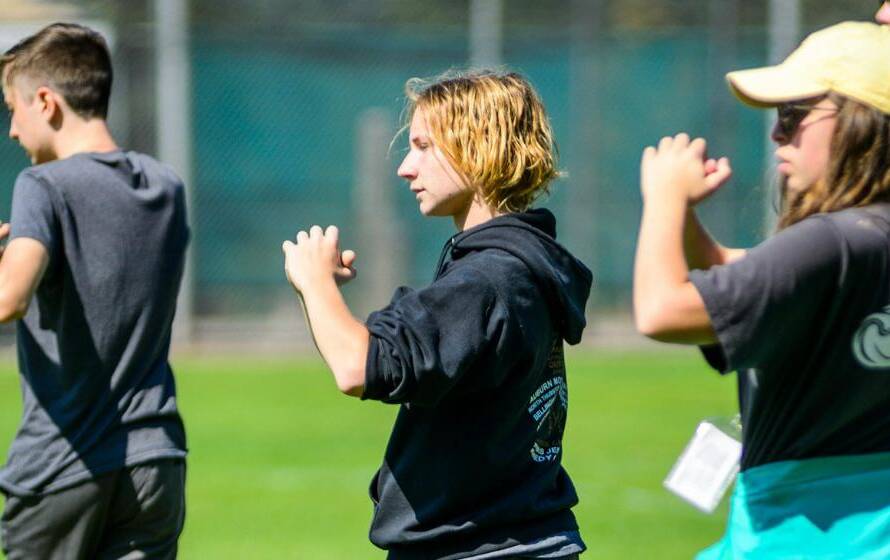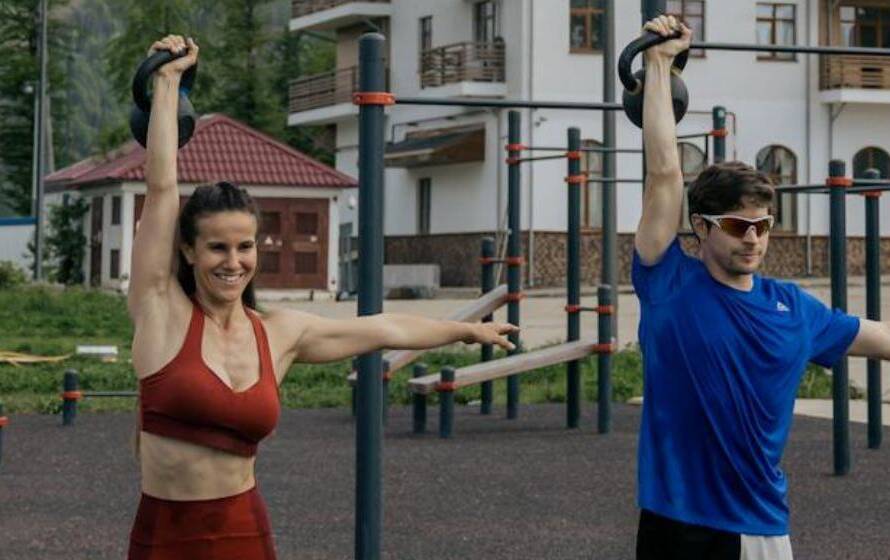


Many applicants train one capacity in isolation (running only, or lifting only). The PFA and Depot retests reward combined output under fatigue. Stack cardio before strength work in practice sessions when you can.
Complete Guide to the RCMP Fitness Assessment
The fitness test for RCMP is called the Police Fitness Assessment (PFA). It replaced the old PARE test on April 1, 2024. The PFA has four job-specific stations: a 500-metre foot pursuit with a fence climb, a weighted sled push/pull and mannequin takedown, an emergency loading and stretcher carry, and a 150-metre sprint in body armour that must be done in 90 seconds. Cadets take the gold-standard version at Depot. Officers repeat the field version every three years.
If you’re planning to apply to the Royal Canadian Mounted Police, one of the first questions you’ll have is: what is the fitness test for RCMP? The answer changed significantly in 2024. The RCMP retired its decades-old Physical Abilities Requirement Evaluation (PARE) and replaced it with the Police Fitness Assessment (PFA) a test built around real policing tasks instead of a generic obstacle circuit.
According to the RCMP Gazette (July 2024), the PFA was officially implemented on April 1, 2024, after several years of development with researchers from the Canadian Armed Forces Morale and Welfare Services. By mid-2024, over 1,000 officers across Canada had been tested under the new system.
Here’s what the official RCMP documents show about each station, the passing standards, how to prepare, and what happens if you fail.
Why the RCMP Replaced the PARE with the PFA
The PARE served the RCMP for over 30 years. It was a continuous circuit, six laps of an obstacle course, a push/pull station, and a torso bag carry, all completed in gym shorts and running shoes. The passing time was 4 minutes 45 seconds for applicants.
The PFA takes a different approach. Each station mirrors an actual policing task, and cadets eventually complete the test in full-duty uniform with weighted gear. Sergeant Chris Scott of the RCMP’s Occupational Skills Maintenance Unit explained that the old test often caused anxiety about injury. He noted the PFA allows officers to commit maximum effort to each task with recovery time between stations.
Leslie Frei, the national fitness and health promotion manager, said the development team worked with officers of all ages and body types to make the test representative of the entire RCMP workforce. Researcher Rachel Blacklock from the Canadian Armed Forces Morale and Welfare Services led the project, using focus groups and field data to design scenarios that simulate real-world policing challenges.
The Four PFA Stations: What Each Test Involves
The Police Fitness Assessment measures your ability across four distinct tasks. Each one replicates a real policing scenario, according to the RCMP physical standards page.
Station 1: Foot Pursuit (500-Metre Run + Fence Climb)
You run 500 metres with multiple direction changes, simulating a chase through real terrain. At the 250-metre mark, you climb a 1.4-metre (4.6-foot) chain-link fence. The fence appears at the halfway point to test your agility and upper-body strength while your heart rate is already elevated. In the gold-standard version at Depot, this is an actual chain-link fence.
Station 2: Physical Control (Sled + Mannequin Takedown)
This station simulates controlling a combative subject. You push and pull a weighted sled that requires overcoming 37 kilograms (82 lbs) of resistance. At the midpoint, you lie flat on the ground and return to standing. After the sled work, you pull down a weighted mannequin requiring 54 kilograms (119 lbs) of force. You cannot stop at any point during this station.
Station 3: Emergency Assistance (Truck Loading + Stretcher Carry)
This test replicates disaster response. You load 15 objects (each weighing 23 kg / 51 lbs) into a truck bed. The objects come in five different shapes. This part is timed. Then you run 50 metres and carry a weight that replicates half a stretcher with an adult casualty. You repeat the carry three times. Constable Jihan McDougall, who trialled the test in B.C., said this station replicates the urgency of loading a truck during wildfire response.
Station 4: High-Priority Task (Armoured Sprint + Stairs)
You put on hard body armour and carry a 4.5 kg (10 lb) weight in your hands. Then you sprint 150 metres, climb two flights of stairs, and complete a final short sprint. The entire station must be done in 90 seconds. This simulates an Immediate Action Rapid Deployment response to an active threat.
Early in the 26-week cadet training program, cadets complete the PFA in a t-shirt and shorts. By their final assessments, they wear the full uniform with equivalent kit weight distributed across a body armour vest and duty belt.
Gold Standard vs. Field Test: Two Versions of the PFA
The PFA comes in two versions, each designed for a different audience.
The Gold Standard (Cadet Version) is only administered at RCMP Depot Division in Regina, Saskatchewan. It uses real equipment, an actual chain-link fence, a real truck bed, actual flights of stairs. Cadets must pass this version to graduate. Over 200 cadets graduated under this format in its first year.
The Field Test (Regular Member Version) is a portable adaptation designed for local detachments. Serving officers take this version every three years during mandatory block training. Marie-Pier Ricard, a national fitness and health promotion advisor with the RCMP, said officers can now take the test at their local detachment instead of travelling to specialized facilities. Rachel Blacklock confirmed it uses the same movements and similar demands, just in a simplified setup.
During the recruiting process, applicants may also get the chance to try the field version. Its purpose at that stage is to help you predict your success on the gold-standard test at Depot.
PFA vs. PARE: Key Differences at a Glance
| Feature | PFA (2024–Present) | PARE (Pre-2024) |
|---|---|---|
| Design | 4 job-specific task simulations | Continuous circuit + push/pull + bag carry |
| Uniform | Full duty uniform + kit weight (final) | Gym shorts and running shoes |
| Fence climb | Yes, 1.4 m chain-link | No |
| Sled/mannequin | 37 kg sled + 54 kg mannequin | 32–36 kg weight stack push/pull |
| Time limit | 90 seconds (Station 4 only) | 4:45 total circuit |
| Portability | High, field test at local detachments | Low, required specific facilities |
| In-service frequency | Every 3 years (block training) | Every 2 years (health assessment) |
| Injury/anxiety risk | Lower (per officer feedback) | Higher (per officer feedback) |
The PFA is one component of the broader RCMP fitness standards every applicant must meet.
What Happens If You Fail the PFA at Depot?
The PFA is administered during the first week at Depot. According to multiple posts on the r/AskLE subreddit from late 2024 and early 2025, the RCMP is bringing back the “fail and go home” policy. In previous years, cadets who didn’t pass could stay and retrain. Under the updated policy, failing the PFA in week one means being sent home.
One contributor who attended a 3-week DICE program at Depot warned that poor fitness doesn’t just affect the PFA, it compounds. Exhaustion from the intense daily schedule affects performance in police science classes, driving simulations, and firearms training. They stressed that arriving in peak physical shape is the single most controllable factor for surviving Depot. If you’re wondering how demanding Depot really is, fitness is where it starts.
For serving officers, the RCMP offers a more supportive approach. Fitness and health promotion advisors provide individualized training programs to help officers pass the field test. Chelsea Gervan, an RCMP fitness advisor, confirmed they offer personalized programs to help achieve a passing score.
How to Prepare for the RCMP Fitness Test
The RCMP outlines a four-step applicant fitness process on its official careers page:
Step 1, Log your workouts. Your recruiter will provide fitness log sheets. Start recording exercise type, duration, and date immediately, even before you receive the official sheets.
Step 2, Complete self-assessments every 6–12 weeks. The RCMP provides three benchmark tests:
| Test | Minimum | Target | Superior (Top 10%) |
|---|---|---|---|
| 5 km Run | 30:00 | 23:30 – 26:30 | 20:20 – 23:00 |
| Push-Ups (continuous) | 10 reps | 25 – 40 reps | 40 – 60 reps |
| Controlled Falls (1 min) | 16 reps | 21 – 25 reps | 25 – 40 reps |
The RCMP is clear about what these numbers mean. The “minimum” is the floor, falling near it significantly increases your risk of failure at Depot. The “target” reflects the average cadet across genders. The “superior” is the top 10%.
Step 3, Complete a self-declaration form. This is a document where you honestly attest to your fitness habits before entering the Training Academy. The RCMP website says it directly: “You cannot hide your lack of fitness at Depot. If you are not physically ready, discuss this with your recruiter.”
Step 4, Take the PFA. You’re not required to pass the PFA before training starts, but the RCMP encourages you to try it if you get the chance. At Depot, you’ll be required to pass it during the program.
Recommended Weekly Training
The RCMP recommends 3–5 cardiovascular sessions and 2–3 resistance training sessions per week. Workouts should include running (with directional changes), jumping, lifting, and carrying. Some sessions should keep your heart rate elevated for 20–30 minutes. The RCMP specifically says you should finish many of your workouts having sweat through your clothes and requiring a shower immediately afterwards.
The RCMP also publishes a four-level Functional Strength and Conditioning Program. Level 1 is for people who haven’t been active. Level 4 is designed for advanced athletes pursuing specialized roles like the Emergency Response Team. Level 4 entry requires a Cooper Test under 12 minutes and more than 43 push-ups (males) or 29 (females).
If you’re still in the early stages of deciding whether to apply, our guide to getting into the RCMP covers every stage of the process.
Medical Clearance Required Before the PFA
You can’t register for a PFA test session without medical clearance. The RCMP requires a Physical Employment Standard (PES) Form 6627 completed by a physician. A February 2026 PFA recruiting event in Surrey, BC confirmed this, along with requirements for government-issued ID and arrival 15 minutes before the session.
The medical evaluation screens for cardiovascular history, pulmonary function, blood pressure, and coronary artery disease risk factors. The PFA is classified as a maximal exertion test, similar to a clinical exercise stress test. You also need separate vision and hearing exams completed at your own expense before reaching the medical stage of the application.
Frequently Asked Questions
No. The PARE was retired on April 1, 2024. The current test is the Police Fitness Assessment (PFA). While the.
Cadets currently take the PFA during the first week at Depot. You may also get the chance to try the.
At a bare minimum, the RCMP expects a 5 km run under 30 minutes and at least 10 continuous push-ups. But the RCMP warns that falling near these minimums significantly increases your risk of failure at the academy. Aiming for the “target” range (23:30–26:30 run time, 25–40 push-ups) gives you a much stronger chance of success. If you’re concerned about whether you qualify overall, see what could disqualify you from the RCMP.
No. The PFA is gender-neutral. All cadets and officers are held to the same passing standard regardless of gender. The.
Yes. Officers take the field version of the PFA every three years as part of mandatory block training. This replaced.
The fitness test is just one part of a multi-step process. From application to Depot, the RCMP hiring timeline typically takes several months to over a year, depending on individual circumstances and processing volume.
Disclaimer: This article is based on publicly available RCMP documents, official government sources, and published accounts from recent cadets. It is general information, not professional medical, legal, or career advice. Fitness requirements can change. Always verify directly with your local recruiting office before making decisions.
Sources Referenced
- Physical standards to become an RCMP officer, rcmp.ca (official careers page)
- RCMP revamps fitness assessment to reflect on-duty demands, RCMP Gazette, July 2024
- New RCMP fitness test will better reflect demands of police work, RCMP Gazette, Sept 2022
- Police Fitness Assessment (PFA) Test Session, rcmp.ca recruiting events, Feb 2026
- Cadet Training Program, rcmp.ca, Depot Division
- RCMP PFA discussion, r/AskLE (Reddit), Feb 2025
- Analysis of Occupational Fitness Standards and PFA Implementation in the RCMP
- RCMP Functional Strength & Conditioning Program, Levels 1–4 (2014)
- Become an RCMP officer: Submit required forms and documents, rcmp.ca
- Become a police officer with Federal Policing: Complete a suitability assessment, rcmp.ca
- RCMP Pre-Academy Fitness Training Guide, Scribd
Sources:
Physical standards to become an RCMP officer
RCMP Gazette
This article reflects current RCMP policy based on official government documentation. Eligibility and suitability decisions are assessed on a case-by-case basis during the application process.
By Alex Morgan, Certified Personal Trainer, https://joinrcmp.ca/author/alex-morgan/
Last Updated: May 31, 2026