

How Long Is RCMP Training? Depot Duration, Timeline and What Comes After
Quick Answer: Depot is 26 weeks, 820 hours of full-time residential training at the RCMP Academy in Regina, Saskatchewan. After graduating, new constables complete a mandatory 6-month Field Coaching Program at their first assigned detachment. From Day 1 at Depot to independent patrol duty takes roughly one year.
What RCMP Depot Training Is
Depot Division is Canada’s only national police training academy, located at 6101 Dewdney Avenue in Regina. It has trained RCMP officers continuously since 1885 — the longest-operating police academy in North America. Every RCMP regular member, regardless of province, language, or background, trains at the same facility under the same program.
The mandatory course is the Cadet Training Program (CTP). It runs 26 weeks, totals 820 hours of instruction, and is offered in both English and French. Cadets live on campus for the full duration. Even if you live in Regina, you must reside in the barracks — the residential requirement is non-negotiable.
As of April 1, 2026, cadets receive $1,000 per week in training allowance — up from $525 per week previously. Over 26 weeks, that totals approximately $26,000 in gross pay.
→ Deep dives: RCMP Depot: The Complete 2026 Guide | What Is RCMP Depot Division and Where Is It Located? | RCMP Cadet Training Program (CTP): Complete Overview
The Complete RCMP Training Timeline
Most people ask only about Depot. The actual path from application to independent officer is longer:
| Phase | Duration | Where |
|---|---|---|
| Application process | 6–12 months | Online + assessment centres |
| Depot (Cadet Training Program) | 26 weeks | Regina, Saskatchewan |
| Field Coaching Program | 6 months | First assigned detachment |
| Probationary period | 2 years from hire date | First assigned detachment |
For a breakdown of every step before Depot, the RCMP application process guide covers the full sequence. The RCMP’s official Cadet Training Program page is at rcmp-grc.gc.ca/en/cadet-training-program.
How Long Is RCMP Training: The 26-Week Breakdown
The program builds toward four detachment visits — practical assessments in simulated policing environments with civilian actors. Here’s the week-by-week structure:
| Weeks | Phase | What Happens |
|---|---|---|
| 1–11 | Foundation | Basic skills, criminal law, first PFA fitness test at Week 2 |
| 12 | 1st detachment visit | Live scenarios at Buffalo or Eagle simulated detachment |
| 13–16 | Intermediate | Deepening competency, more independent scenario work |
| 17 | 2nd detachment visit + posting announcement | First posting announced; second scenario block |
| 18–21 | Advanced | Third PFA; complex multi-party scenarios |
| 22 | Final detachment practice | Dress rehearsal before culminating assessment |
| 23 | Final Detachment Test + EVO exam | Pass/fail assessment; Emergency Vehicle Operation exam |
| 24–26 | Graduation phase | Final exams, Regimental Dinner, Number Ceremony, Pass Out Ceremony |
Cadets learn their first posting in Week 17 — nine weeks before graduation. Assignments are based on operational need, not preference. Most graduates go to General Duty in contract provinces and territories (everywhere except Ontario and Quebec, which have their own provincial forces).
→ Deep dives: RCMP Depot Simulation Training: Inside Buffalo and Eagle Detachments | RCMP First Posting: How Cadets Are Assigned After Depot | Can You Fail RCMP Depot?
Inside the 820 Hours: What Cadets Actually Learn
The 820-hour curriculum splits across seven subject areas:
| Subject | Hours | Share of CTP |
|---|---|---|
| Applied Police Sciences | 432 | 53% |
| Firearms | 104 | 13% |
| Police Defensive Tactics (PDT) | 94 | 11% |
| Police Driving | 67 | 8% |
| Fitness Conditioning | 45 | 5% |
| Drill and Deportment | 37 | 5% |
| Other (admin, orientation, etc.) | 41 | 5% |
Applied Police Sciences is the academic core — criminal law, Charter rights, evidence, report writing, mental health response, and the RCMP’s CAPRA problem-solving framework. It accounts for more than half of all training hours. Fifteen modules are built around realistic scenario work, not lecture alone.
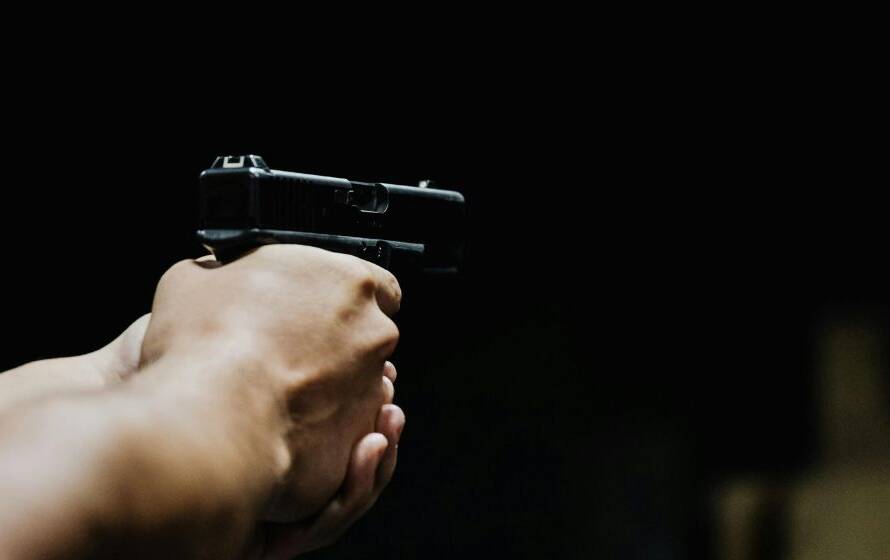
Firearms training covers the Smith & Wesson 9mm pistol, 12-gauge shotgun, and patrol carbine. About 80% of cadets arrive with no prior shooting experience. A single firearms safety violation ends training permanently — there are no second chances.
Police Defensive Tactics covers handcuffing, OC spray, TASER 7 deployment, and IARD (Immediate Action Rapid Deployment) for active threat scenarios. The TASER 7 is issued alongside the three service firearms.
Police Driving qualifies cadets for emergency vehicle operation (EVO). The EVO exam in Week 23 is one of the final pass/fail gates before graduation.
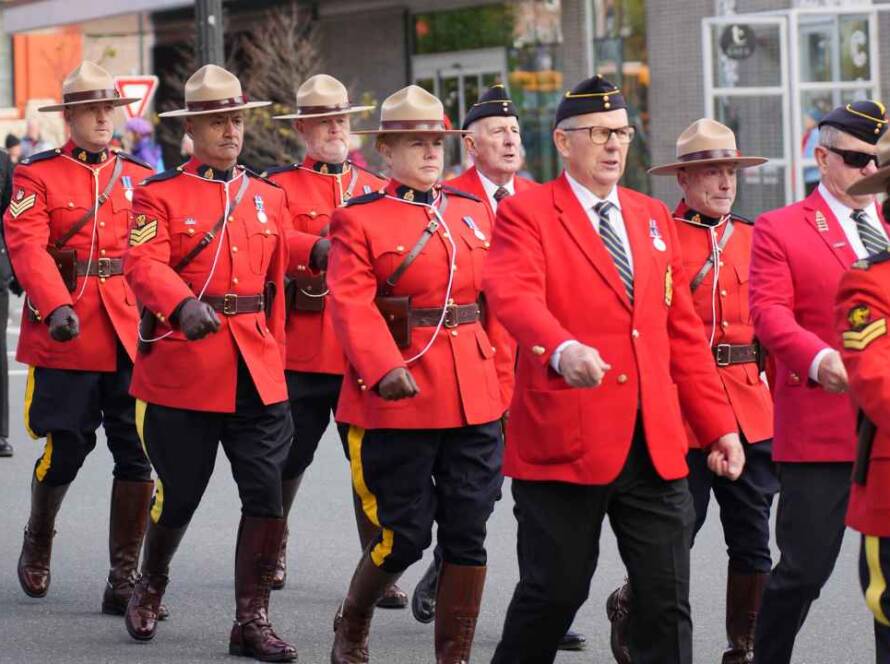
Drill and Deportment accounts for 37 hours. Cadets learn foot drill, uniform maintenance, and ceremonial protocol. The uniform is earned through performance — cadets must meet standards before wearing certain pieces of kit.
→ Deep dives: What Do You Learn at RCMP Depot? Full Curriculum Breakdown | What Is the RCMP CAPRA Model? | RCMP Depot Firearms Training: What Weapons Cadets Train With | RCMP Depot Drill and Ceremony Training | RCMP Depot Defensive Tactics Training
The Troop System: Collective Accountability
Cadets don’t train as individuals. They train as a troop — up to 32 cadets who live, eat, march, and are evaluated together for all 26 weeks. The system runs on collective accountability: one cadet’s performance affects the troop’s standing.
Each troop is assigned a Depot Troop Leader (DTL) — an experienced RCMP sergeant who guides the group through the full program. Cadets rotate Troop Leader and Assistant Troop Leader roles on a schedule throughout training.
→ Deep dive: How Does the RCMP Depot Troop System Work?
The 26-week timeline is fixed, but readiness going in isn’t. Cadets who arrive able to comfortably exceed the Week 1 PFA floor — not just barely pass it — typically spend the first weeks building confidence rather than managing anxiety. That psychological difference compounds over the full program: cadets who pass Week 1 with margin tend to stay in their troop’s leadership rotation longer, and the troop system rewards consistent contributors throughout all 26 weeks.
Daily Life at Depot
A typical Depot weekday starts at 5:00 AM. Cadets march to breakfast in 15-minute windows, attend training blocks until roughly 4:00 PM, then spend evenings studying, maintaining kit, and completing mandatory fitness hours. A 22:00 curfew applies every weeknight — cadets must be back on campus.
Weekends run on a pass system: Friday 16:30 to Sunday 22:00. The first four to five weeks are restricted. After that, cadets can leave campus, but most don’t travel far — cost and distance limit most trips. Most cadets go home once: at the Christmas break.
Following a 2024 policy update, personal phones are permitted at Depot. They must be stored in a locked “squirrel” cabinet during classrooms, scenarios, firearms training, drill, and while walking in uniform. In dorms, during breaks, and on weekends, phones are available.
Throughout the 26 weeks, fitness plays a central role. For an overview of what you’ll need to meet, see the RCMP fitness standards guide.
→ Deep dives: What Is a Day Like at RCMP Depot? Daily Schedule and Life on Campus | Can You Go Home During RCMP Depot Training? | Can You Have Your Phone at RCMP Depot? | Do I Need a Laptop for RCMP Depot?
Can You Fail RCMP Training at Depot?
Yes — and roughly 30 to 40% of cadets don’t complete the program. Failure routes include:
- Fitness: Failing the Week 1 PFA means immediate release. No exceptions, no back-trooping.
- Academics: A two-strike rule applies. Fail the same subject twice and release is possible. Back-trooping (repeating weeks with a later troop) is discretionary, not guaranteed.
- Firearms safety: Zero tolerance. A single unsafe act ends training permanently.
- EVO exam: Failing the Week 23 driving assessment is a final gateway before graduation.
- Conduct: Dishonesty, harassment, or core values violations trigger permanent dismissal. Cadets may be required to repay their training allowance — up to approximately $26,000.
Police officers with at least 2 years of experience at a Canadian agency qualify for a condensed 5-week orientation instead of the full 26 weeks. This applies only to qualified transfers, not new recruits without prior policing experience.
→ Deep dive: Can You Fail RCMP Depot? (What Happens and What Comes Next)
After Graduation: Field Coaching and Your First Posting
The Pass Out Ceremony takes place in Week 26. It includes a troop-customized foot-drill performance, the official awarding of Constable status, and the Number Ceremony — the moment each graduate receives their regimental number, which they carry for the rest of their career. Family members are invited and receive a pre-graduation Family Workshop explaining what to expect at the first posting.
After graduation, new constables move directly into the Field Coaching Program (FCP) — six months of supervised patrol at their assigned detachment. Phase 1 (months 1–2) is shadowing an experienced field coach. Phase 2 (months 3–6) builds toward independent work. Completing the FCP earns promotion to Constable Level 2 and a salary increase.
A two-year probationary period runs from the hire date after graduation. It is governed by the Commissioner’s Standing Orders (Employment Requirements), SOR/2014-292. Probationary constables have fewer protections than regular members and can be discharged more easily if performance or conduct concerns arise.
For career progression after Depot, see the RCMP career paths overview. For RCMP recruitment details from the start, the recruitment guide covers the full picture.
→ Deep dives: RCMP Depot Graduation: The Pass Out Ceremony | RCMP First Posting: How Cadets Are Assigned After Depot | What Is the RCMP Field Coaching Program? | How Long Is the RCMP Probationary Period?
How to Prepare for RCMP Depot Training
The RCMP doesn’t publish a pre-Depot curriculum. Based on what the program covers, the highest-leverage preparation areas are:
Fitness first. Arrive able to pass the PFA comfortably — not just barely. The 26 weeks add physical load on top of the formal fitness tests. The RCMP’s Level 2 conditioning program is the target to build toward before arriving. Key components: 20-metre shuttle run, push-ups, and grip strength.
Law basics. Reviewing the Criminal Code, Charter rights, and search-and-seizure principles gives a head start in Applied Police Sciences. Cadets aren’t tested on incoming knowledge, but familiar terminology reduces cognitive load in the early weeks.
Collective mindset. Depot runs on troop accountability. Everything is evaluated as a unit. Arriving ready to subordinate individual performance to group outcomes is the biggest adjustment for most cadets.
Finances. At $1,000/week, the training allowance covers basic expenses during training. Budget carefully if you have obligations at home — rent, loan payments, and family costs don’t pause during the 26 weeks.
→ Deep dives: How to Prepare for RCMP Depot: What to Do Before You Arrive | What to Expect in RCMP Depot Physical Training
Depot is 26 weeks. The Field Coaching Program that follows is another six months of supervised patrol at your assigned detachment. Combined, the path from Day 1 at Depot to independent patrol duty is roughly a year. Cadets who plan financially or logistically around the Depot duration alone often arrive at their first posting underprepared for the FCP’s demands.
When Do RCMP Depot Troops Start? Intake Schedule Explained
There is no fixed annual intake calendar at RCMP Depot. Troops form year-round based on the recruitment pipeline and operational need. The RCMP’s National Recruitment Strategy 2026-2029 targets 50 troops of 32 cadets each for the 2026-27 fiscal year — aiming to put 1,600 cadets through training annually. That pace represents a substantial increase over recent years, when the RCMP averaged 446 days from initial application to a Depot start date (CTV News, March 21, 2026).
Your troop start date is set individually after your conditional offer is accepted and your pre-employment clearances are finalized. The RCMP does not publish a schedule of upcoming troop start dates. Applicants should expect to hear their Depot date through the recruiter assigned to their file, typically within weeks of receiving their conditional offer.
One exception: the DICE (Drug Identification and Counter Exploitation) specialist training runs on fixed windows rather than year-round intake. General Duty Depot placement works differently and is not tied to any published calendar.
What to Pack for RCMP Depot: What the RCMP Provides vs. What You Bring
The RCMP issues virtually everything a cadet needs to train. Uniforms (full dress and working dress), all service firearms, body armour, defensive tactics equipment, police driving vehicles, and a laptop are all provided at no cost. Cadets do not purchase or supply any policing or training gear before arrival.
What cadets bring is minimal. The practical list is: civilian clothes for evenings and weekends, running shoes for personal fitness, toiletries, any personal medication, and study materials. Many cadets bring items for their dorm room — small personal effects, bedding preferences, and items that make a six-month stay comfortable. There are no restrictions on bringing a personal laptop in addition to the issued one, though it is not required.
One logistical note: storage is limited. Depot dorm rooms are shared and small. Cadets who pack as if leaving for months rather than training at a residential academy tend to create clutter that affects troop tidiness inspections. A practical rule is to bring only what you would take on an extended work trip, not a household move.
How Hard Is RCMP Depot? What the Acceptance Numbers Show
Depot is significantly harder to reach than most applicants expect, and harder to complete than the 26-week duration suggests. Blue Light Consultancy (February 2026) reports that roughly 1 in 20 applicants receives a Depot offer, and only 1 in 23 ultimately graduates as a constable. The combined selection-and-completion rate from initial application to sworn officer works out to approximately 4.3%.
Inside Depot, attrition runs at 30 to 40% of cadets who begin the program. The three highest-risk exit points are Week 1 (the PFA fitness test, which offers no back-trooping and no retakes), Week 23 (the Final Detachment Test and EVO driving exam, both pass/fail), and any point where a conduct or integrity violation occurs. Physical fitness is typically the leading cause of early release — cadets who arrive only marginally fit routinely fail the first fitness assessment before they have a chance to demonstrate anything else.
The difficulty is not primarily academic. Applied Police Sciences — 432 hours of criminal law, Charter rights, and scenario-based assessment — is demanding, but cadets with little formal legal background routinely succeed. The harder adjustment for most cadets is the collective accountability model: individual performance directly affects the entire troop, and the pace of training leaves little margin for private struggles.
The 26-week duration is accurate. What most guides omit is the broader picture: only about 1 in 23 applicants who start the RCMP process actually graduates as a constable. Blue Light Consultancy (February 2026) puts the combined selection-and-completion rate at approximately 4.3 percent. Arriving at Depot is a significant achievement on its own. The Week 1 PFA fitness test, which offers no back-trooping and no retakes, is where the most preventable exits happen. Cadets who arrive marginally fit fail before they can demonstrate anything else about their candidacy.
RCMP Cadet Chronicles: The Official Week-by-Week Account
The RCMP publishes a weekly journal series called Cadet Chronicles on the official RCMP website at rcmp-grc.gc.ca/en/depot/cadet-chronicles. The series follows a troop from Week 0 — arrival and orientation — through Week 26 and graduation, updated each week as the troop progresses.
Cadet Chronicles is the closest publicly available primary source for what Depot actually looks and feels like from a cadet’s perspective. Each entry describes the week’s training focus, assessment milestones, and day-to-day experience in language that is specific rather than promotional. For anyone preparing for Depot or trying to understand what a family member is going through, this resource offers a level of operational detail that almost nothing else can match.
The series is updated as new troops cycle through, so content reflects current training rather than historical accounts. When comparing Cadet Chronicles entries year over year, the structure of the 26-week program is consistent — the curriculum rarely changes significantly between cohorts.
Most applicants never reach Depot. Blue Light Consultancy (February 2026) reports roughly 1 in 20 applicants receives a Depot offer. The selection process — application review, fitness testing, psychological assessment, polygraph, and background investigation — eliminates far more candidates than Depot itself. For applicants who do reach Depot, the Week 1 PFA is the highest-risk single moment: it offers no retakes and no back-trooping. Cadets who arrive marginally fit fail before they can demonstrate anything else about their candidacy.
Frequently Asked Questions
6101 Dewdney Avenue, Regina, Saskatchewan. The 640-acre campus has been operational since 1885 — the longest-running police training academy in North America.
Yes. As of April 1, 2026, cadets receive $1,000 per week — approximately $26,000 total over the 26-week program. The previous rate was $525 per week.
It depends on the type. Firearms safety violations and Week 1 fitness failures result in immediate release. For academics, a two-strike rule applies — fail the same subject twice and release is possible. Back-trooping is discretionary.
Yes. The CTP runs in both English and French. Troops are typically unilingual, with bilingual scheduling available depending on operational timing.
Yes, after the first 4–5 restricted weeks. Weekend passes run Friday 16:30 to Sunday 22:00. A 22:00 curfew applies every weeknight — cadets must be back on campus.
Up to 32 cadets. All 32 live, eat, march, and are evaluated together for the full 26 weeks under a collective accountability model.
Approximately 30–40% of cadets don’t complete the program. The most common failure points are the Week 1 fitness test, the Week 23 Final Detachment Test, and conduct violations.
Family can visit Regina, but cadets must live on campus for all 26 weeks — including cadets who already live in the city. The residential requirement has no exceptions.
The RCMP provides all uniforms and training equipment. Cadets bring personal clothing, toiletries, and study materials. The RCMP also issues a laptop for use during training.
Yes. The Depot campus has medical staff and health support services on site for cadets throughout the 26-week program.
Sources
- RCMP Cadet Training Program — Royal Canadian Mounted Police, Government of Canada
- RCMP Cadet Chronicles — Royal Canadian Mounted Police, Government of Canada
This article reflects current RCMP policy based on official government documentation. Eligibility and suitability decisions are assessed on a case-by-case basis during the application process.