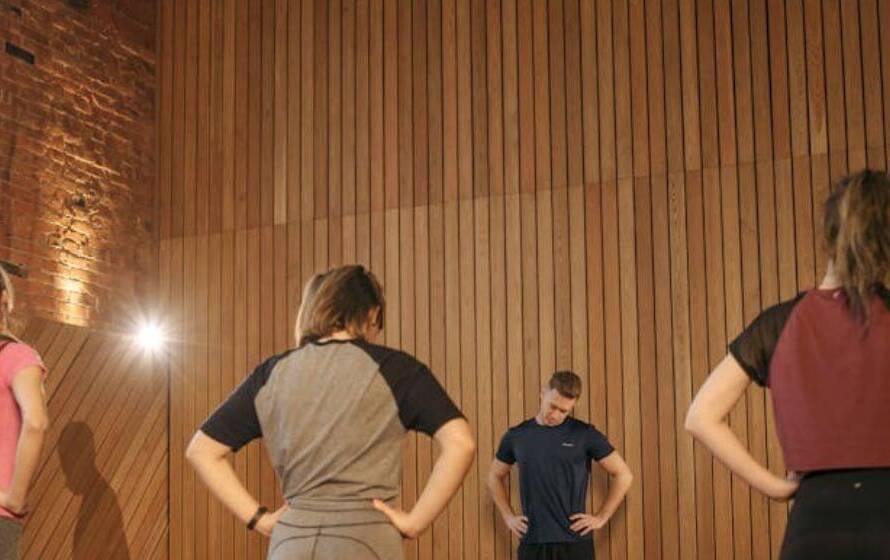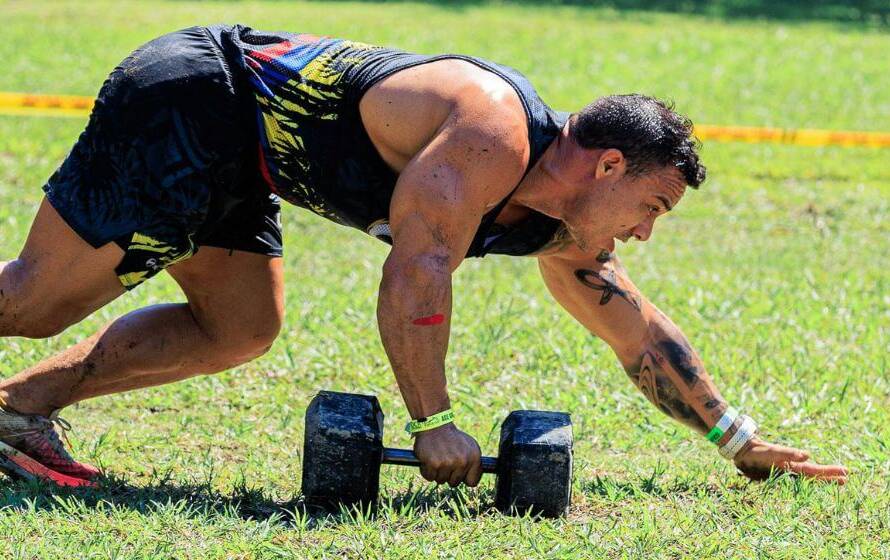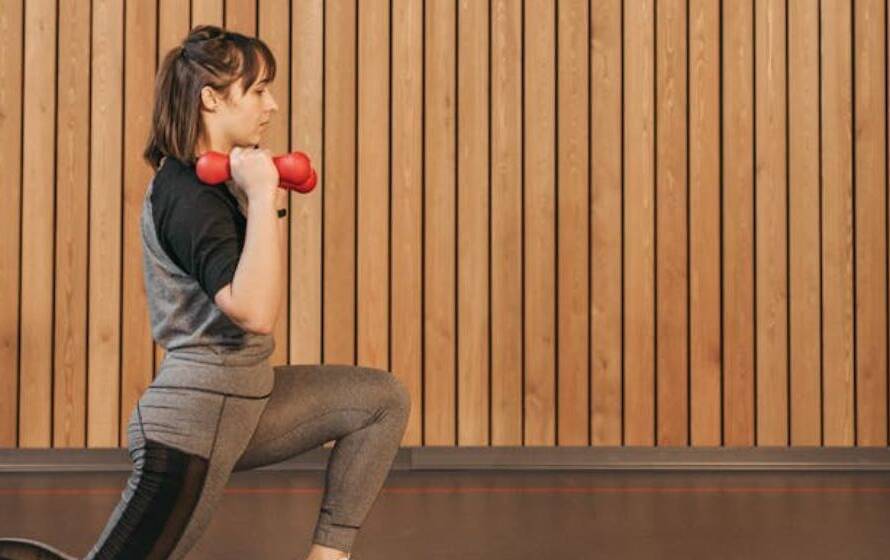


Many applicants train one capacity in isolation (running only, or lifting only). The PFA and Depot retests reward combined output under fatigue. Stack cardio before strength work in practice sessions when you can.
What Is the Police Fitness Test 2.4 km Run? RCMP Standards Explained
TL;DR: The 2.4 km run appears in RCMP training programs as a conditioning drill, not as a standalone pass/fail test. The RCMP’s formal fitness test since April 2024 is the Police Fitness Assessment (PFA), which uses a 500-metre foot pursuit. Pre-Depot readiness is measured with a 5 km run (minimum 30 minutes).
What Is the Police Fitness Test 2.4 km Run?
The 2.4 km run is a cardiovascular training drill referenced in RCMP fitness preparation programs, specifically the advanced Level 3 and Level 4 conditioning guides that draw from Royal Military College methodology. According to RCMP fitness documentation reviewed for this article, the 2.4 km run is performed at maximum effort (Rate of Perceived Exertion 10) and is immediately followed by a push-up test. This combination simulates the exhaustion of a foot pursuit that ends in a physical altercation.
The RCMP’s Actual Formal Fitness Test: The PFA
The Police Fitness Assessment has four components. Each one directly simulates a policing task. Below is what each involves:
1. Foot Pursuit, 500-Metre Run With Fence Climb
The participant completes a 500-metre run with directional changes. At the halfway point (approximately 250 metres), they climb a 1.4-metre chain-link fence and continue running. In final assessments at the RCMP Training Academy (Depot), this is performed in police uniform with equivalent kit weight.
2. Physical Control, Sled Push/Pull and Mannequin
The participant pushes and pulls a sled requiring 37 kg of resistance. At the halfway point, they lie on the ground and return to standing before continuing. They then pull down a weighted mannequin requiring 54 kg of force. No stopping is permitted at any point.
3. Emergency Assistance, Truck Loading and Stretcher Carry
Part A: Load 15 objects (23 kg each, 5 different shapes) into a truck bed. Part B: Run 50 metres carrying a load equivalent to half a stretcher with an adult casualty, three repetitions for time.
4. High Priority Task, 90-Second Timed Sprint
Wearing hard body armour and carrying a 4.5 kg weight, the participant sprints 150 metres, climbs two flights of stairs, then completes an additional short sprint, all within 90 seconds. This is the only timed component with a hard cutoff.
Two Versions of the PFA: What Each One Means for You
The PFA runs in two formats:
Gold Standard (Depot version): Used at the RCMP Training Academy in Regina. Cadets must pass this version to graduate. It uses real infrastructure, an actual chain-link fence, real stairs, a real truck bed. A cadet who fails in week one may be sent home immediately. There is no guaranteed remediation period.
Field Standard (serving member version): A portable version administered at local detachments. Serving members complete it every three years as part of mandatory block training. It can be administered without specialist equipment.
The 5 km Run: What Applicants Must Hit Before Depot
Before arriving at Depot, applicants are expected to self-assess using a 5-kilometre run. The RCMP fitness guide sets three performance tiers:
| Standard | 5 km Time | What It Signals |
|---|---|---|
| Minimum | 30:00 | Lowest acceptable level. Risk of struggle at Depot increases below this. |
| Target | 23:30 – 26:30 | Average cadet population across genders |
| Superior | 20:20 – 23:00 | Top 10% of cadet performance |
The RCMP specifically recommends training on outdoor routes, not treadmills. Treadmills do not prepare the connective tissue and leg muscles for outdoor surfaces encountered at the academy.
For a full breakdown of every physical standard RCMP applicants must meet, see our complete RCMP fitness standards guide.
Run Tests Inside Depot: What Cadets Face Week by Week
Once at Depot, run demands escalate steadily. According to RCMP cadet training program documentation reviewed for this article, the physical testing schedule includes:
| Training Week | Physical Milestone |
|---|---|
| Week 1 | First PARE, establishes baseline |
| Week 5 | First Cooper’s Run (12-minute max aerobic test, estimates VO2 max) |
| Week 9 | First Three-Mile Timed Run |
| Week 11 | Second PARE |
| Week 17 | Five-Mile Run |
| Week 19 | Third PARE (final evaluation before graduation) |
| Week 20 | Second Cooper’s Run |
| Week 22 | Second Three-Mile Timed Run |
This schedule shows that the RCMP does not rely on a single run distance. Cadets face short max-effort tests (Cooper’s Run), medium timed runs (3 miles), and longer endurance events (5 miles), all in addition to the PARE or PFA circuit tests.
What Was the PARE, And How Did It Use Running?
The Physical Abilities Requirement Evaluation was the RCMP’s primary fitness test for decades before being replaced by the PFA on April 1, 2024. It was also used by the Canada Border Services Agency (CBSA), the Royal Newfoundland Constabulary, and other federal agencies.
The PARE did not include a standalone timed run. Instead, cardiovascular demand came from six laps of a 342-metre obstacle circuit. According to UFV research cited in the source materials, participants typically reached approximately 90% of maximum heart rate by the fourth lap, placing the subsequent push/pull and weight carry stations under significant metabolic stress.
On PARE passing times, a source conflict to flag: The RCMP internal documentation reviewed for this article states the operational standard for a serving RCMP officer was under 3 minutes 30 seconds. A law enforcement career resource (Paladin Security) lists the entry-level RCMP PARE time as 5 minutes 30 seconds. These figures may reflect different populations (serving members vs. applicants) or different time periods. Both figures appear in the sources used, readers should verify the current standard directly with RCMP Recruiting.
PARE gender data from RCMP internal assessment:
| Group | Pass Rate | Average Completion Time |
|---|---|---|
| Male members | 98% | 3 minutes 43 seconds |
| Female members | 84% | 4 minutes 19 seconds |
| Difference | 14% | 36 seconds |
This gap, documented in an RCMP Gender-Based Assessment, was a key factor in developing the PFA. The push/pull station was specifically identified as a failure point for female candidates due to its demands on upper body strength and grip.
How to Prepare: Run Training for the RCMP
Based on the RCMP fitness preparation guides reviewed:
Build to 5 km continuously before applying. If you cannot run 5 km without stopping, your Depot performance is at risk, both physically and academically. Cadets who arrive underprepared report that physical fatigue affects their performance in police science classes and exams.
Train outdoors. Surfaces vary at Depot. Treadmill-only training leaves connective tissues unprepared.
Use the 10% rule. Do not increase weekly running volume by more than 10% per week. Every four weeks, reduce volume to a recovery week to prevent overuse injuries, a documented reason for cadet deferral.
Add interval runs. RCMP training programs prescribe 15 rounds of 30-second all-out sprints with 90-second walking recovery periods to build the anaerobic threshold needed for the obstacle course and foot pursuit.
Include the 2.4 km max-effort drill. Within the Level 3/4 training programs, a 2.4 km run at maximum effort (RPE 10) immediately followed by a push-up test is a specific conditioning method for simulating chase-to-contact scenarios.
Weekly structure (from RCMP guides):
- 3 to 5 cardiovascular sessions per week
- 2 to 3 resistance training sessions per week
- At least some sessions should sustain elevated heart rate for 20 to 30 minutes
- Sessions should be hard enough that you need a shower immediately afterward
Medical Clearance: Required Before Any RCMP Fitness Test
Before registering for a PFA session, applicants must have PES Form 6627 completed and signed by a physician. The PFA is classified as a maximal exertion test equivalent to a 12 METS exercise stress test. Medical review covers cardiovascular history, pulmonary function, blood pressure, and coronary risk factors. Men over 40 and women over 50 face additional screening criteria.
This requirement applies regardless of how fit an applicant appears to be.
Why Physical Standards Matter Beyond the Test
RCMP fitness standards are not just an entry gate. Under the RCMP’s CAPRA risk assessment model, an officer’s physical capacity directly determines what force options are available to them. An officer who is too physically exhausted to control a combative subject with empty-hand techniques is more likely to escalate to higher-level force options, a legal and safety risk for the officer, the public, and the organization.
Ongoing certification matters too. Data from the Project Natterjack National After-Action Review, an internal RCMP review of the 2022 Freedom Convoy response, found that PARE certification was the single most frequently out-of-date routine qualification among deployed officers (cited by 10% of respondents). This suggests that while initial training standards are high, operational pressure makes ongoing recertification harder to maintain.
Frequently Asked Questions
No, not as a pass/fail screening test. The 2.4 km run appears in RCMP conditioning programs as a max-effort.
There is no single run time cutoff. For the 5 km self-assessment, the minimum is 30 minutes. The target range.
The Police Fitness Assessment (PFA), effective April 1, 2024. It has four job-specific components: foot pursuit, physical control, emergency assistance.
Yes, and many training centres still offer PARE preparation. PARE conditioning, particularly the push/pull station and obstacle course ,.
Yes. PES Form 6627, signed by a licensed physician, is required before registration for any PFA test session.
Sources Referenced : police fitness test 2.4 km run
- RCMP revamps fitness assessment to reflect on-duty demands, RCMP Gazette, rcmp.ca https://rcmp.ca/en/gazette/rcmp-revamps-fitness-assessment-reflect-duty-demands-officers
- Physical standards to become an RCMP officer, rcmp.ca https://rcmp.ca/en/careers-rcmp/police-officer-careers/physical-standards-become-rcmp-officer
- RCMP Fitness Standards & Training, joinrcmp.ca https://joinrcmp.ca/rcmp-fitness-standards/
- Physical Abilities Requirement Evaluation (PARE), UFV research, ufv.ca https://www.ufv.ca/media/assets/ccjr/reports-and-publications/PARE_Phase_1.pdf
- Information on PARE, Government of BC https://www2.gov.bc.ca/assets/gov/environment/plants-animals-and-ecosystems/conservation-officer-service/pare_instructions.pdf
- Police Officer Physical Fitness Requirements, Paladin Security https://paladinsecurity.com/law-enforcement-careers/police-officer-physical-fitness-requirements/
This article is based on official RCMP documents, the RCMP Gazette, government-sourced institutional training guides, and an internal RCMP docx analysis reviewed in March 2026. It is general information
Sources:
Physical standards to become an RCMP officer
RCMP Gazette
This article reflects current RCMP policy based on official government documentation. Eligibility and suitability decisions are assessed on a case-by-case basis during the application process.
By Alex Morgan, Certified Personal Trainer, https://joinrcmp.ca/author/alex-morgan/
Last Updated: May 31, 2026