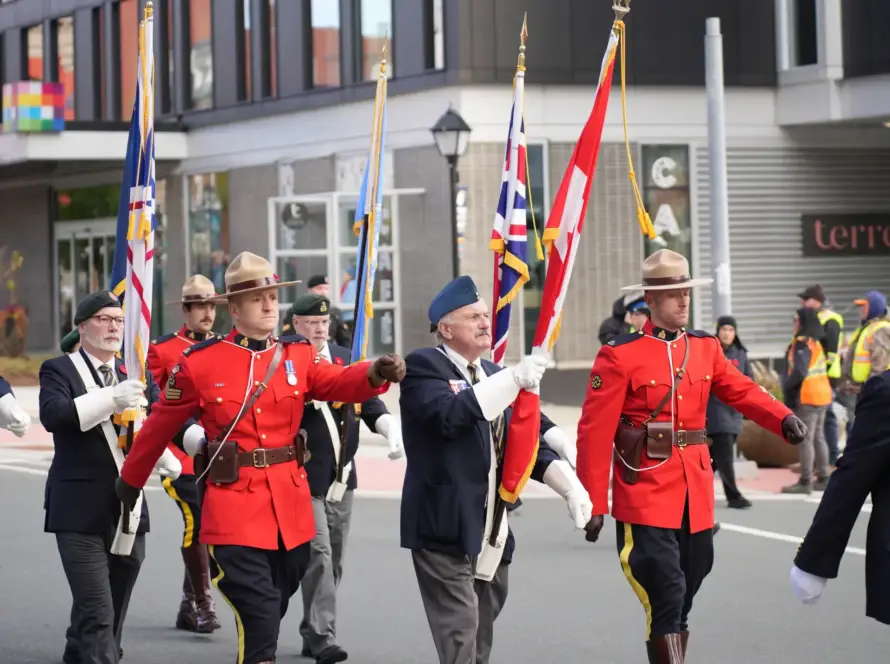


How Many RCMP Officers Are in Canada?
Quick Answer: Canada has approximately 29,118 active RCMP officers as of 2025, down from an authorized strength of 32,518 positions. This shortfall reflects a critical staffing gap. The RCMP operates 700+ detachments across 150+ communities and serves 600+ Indigenous communities nationwide.
For roles, postings, and specializations, see our RCMP careers guide.
Thousands of Canadians search for how many RCMP officers are in Canada every month. The answer matters for anyone thinking about a policing career, and for anyone curious about how Canada’s national police force is holding up. The numbers tell a clear story: the RCMP is stretched thin.
First postings and specializations follow operational need — not personal preference. Most members start in general duty; specialized units usually come after field experience and competition.
Total RCMP Officer Numbers
The RCMP holds 32,518 authorized officer positions across Canada. As of September 2025, roughly 3,400 of those positions sit vacant. That leaves approximately 29,118 active officers on duty.
This shortage has grown fast. In 2023, the front-line gap stood at around 2,000 officers. By September 2025, that number had nearly doubled to 3,400. The RCMP’s own recruitment strategy flags this as a serious operational challenge.
The gap affects every region. Rural and remote detachments feel the most pressure. Some communities wait longer for emergency response when officer numbers fall short. Officers already on duty take on heavier workloads to cover the shortfall.
Retention is part of the problem too. Officers leave for many reasons: burnout, better pay elsewhere, or early retirement. When someone exits before completing a full career, the training investment is lost. The force must recruit faster than it loses people, and right now it is not keeping pace.
If you are thinking about a policing career, find out more about joining the RCMP and what the application process involves.
The 3,400-vacancy shortfall is not distributed evenly. Urban detachments in major centres fill their openings faster; rural and remote detachments are where the gap is sharpest. Applicants who list geographic flexibility in their preferences — specifically openness to smaller communities or northern postings — tend to move through the posting phase faster than those fixed on specific cities. The RCMP assigns based on operational need. Having the need align with your preference is a practical way to reduce wait time after Depot.
Geographic Distribution and Detachments
The RCMP runs more than 700 detachments across Canada. These units serve over 150 communities nationwide. That range covers small rural stations with one or two officers, and large urban units with hundreds of staff members.
Detachment size depends on community need, local contract agreements, and regional priorities. Some serve dense suburban areas near major cities. Others cover thousands of square kilometres with a minimal team. Both types face recruitment challenges, but the dynamics differ significantly.
The RCMP also serves over 600 Indigenous communities across Canada. This is a core part of the force’s mandate. Indigenous Policing sits alongside Federal Policing and Specialized Policing Services as one of three main service areas.
Officers can receive postings almost anywhere in the country. Rank, experience, and operational need all factor into where someone ends up. Some officers build their careers in a single region. Others transfer across multiple provinces over time. To see how the force distributes its people nationally, explore RCMP detachment locations across provinces and territories.
Divisional Structure and Organization
The RCMP organizes its operations into 15 divisions. These divisions use letter designations and have been part of the force’s structure since 1874. Each covers a specific geographic area or operational function.
Federal Policing breaks into four regional commands. The Eastern region covers Quebec, New Brunswick, Nova Scotia, Prince Edward Island, and Newfoundland and Labrador. The Central region covers Ontario. The Northwest region covers Alberta, Manitoba, Saskatchewan, the Northwest Territories, and Nunavut. The Pacific region covers British Columbia and the Yukon.
This divisional structure supports three core service areas: Indigenous Policing, Federal Policing, and Specialized Policing Services. Each area has its own command structure and resource priorities. Officers are assigned based on divisional need, not just personal preference.
Within each division, officers serve in a range of roles. General duty officers handle patrol and emergency calls. Investigators focus on serious crimes. Administrative staff support daily operations. Specialized units tackle cybercrime, organized crime, and border enforcement. The force’s scope is wide, and the roles reflect that.
Contract Policing Across Provinces and Territories
When people ask how many RCMP officers are in Canada, it helps to understand how the force is deployed across different jurisdictions. The RCMP provides contract policing to 11 provinces and territories. Not every part of Canada relies on the RCMP as its primary provincial police force.
Ontario uses the Ontario Provincial Police (OPP). Quebec uses the Sûreté du Québec. Both provinces operate independent forces. The RCMP does not serve as the provincial force in either province.
Alberta is in a period of change. Bill 11 and Bill 49 lay out a planned shift toward an Alberta Sheriffs Police Service. The timeline and scope of that transition are still developing. For now, the RCMP continues to provide provincial policing in Alberta.
British Columbia’s contract arrangement is also under review. The agreement runs uncertain beyond 2032. The Police Services Union in BC has raised this as a significant unresolved question. A change there would affect thousands of officer postings.
Contract arrangements directly shape how many officers go where. They determine pay structures, reporting lines, and deployment priorities. Shifts in these agreements ripple through officer numbers across the country. To see the full picture of the staffing shortage and how contracts factor in, read our dedicated breakdown.
Ontario and Quebec have their own provincial police forces — the OPP and the Sûreté du Québec. RCMP officers in those provinces serve federal mandates: border enforcement, national security, organized crime, and airports. A resident of Toronto or Montreal interested in provincial-level patrol policing would look at OPP or SQ, not the RCMP. Understanding which agency covers your area helps you apply to the right force and set accurate expectations about what postings you’re actually competing for.
Northern Operations and Specialized Deployment
The question of how many RCMP officers are in Canada gets more complex when you look at northern deployments. The RCMP operates in some of the most remote communities in the country. Detachments exist in Arctic Bay, Baker Lake, Cambridge Bay, Cape Dorset, and Iqaluit, among others.
Officers in northern postings face conditions unlike anything in the south. Isolation, extreme weather, and limited backup all add difficulty. Some communities are only reachable by air. That limits supply lines, medical support, and reinforcement options when things go wrong.
Recruitment for northern postings is consistently harder. The pay differential helps, but it does not always offset the personal cost of living in remote locations for extended periods. Retention in these areas is a persistent challenge for the force.
The RCMP also invests in technology to support modern operations. Body-worn cameras are rolling out across British Columbia, with between 3,500 and 3,700 units being deployed. This reflects a broader effort to modernize how the force operates and builds public trust.
The RCMP was founded in 1873. That means the force has been operating for nearly 150 years. Over that time, it grew from a small mounted patrol into a national organization with civilian staff, technical specialists, and officers posted from coast to coast to coast.
Alberta is working toward a provincial police service, and BC’s contract has uncertainty beyond 2032. These are real developments — but they affect contract policing arrangements, not the RCMP’s existence or its federal mandate. Border enforcement, national security, organized crime, and aviation security remain RCMP regardless of provincial contracts. The federal force is actively recruiting at scale, not winding down. Applicants can pursue an RCMP career with confidence that the federal organization continues across all provinces and territories.
Frequently Asked Questions
The RCMP operates more than 700 detachments across Canada, serving over 150 communities nationwide.
The RCMP has 15 alphabetically designated divisions, with four Federal Policing regions covering all provinces and territories.
Ontario and Quebec maintain independent provincial police forces, while the RCMP provides contract policing to the remaining 11 provinces and territories.
Sources:
- What is the Rejection Rate for RCMP Applicants? — joinrcmp.ca
- What Disqualifies You from the RCMP? Complete Guide 2026 — joinrcmp.ca
- What Happens If You Fail the RCMP Entrance Exam? — joinrcmp.ca
- RCMP police officer career paths — rcmp-grc.gc.ca
- RCMP careers — rcmp-grc.gc.ca
This article reflects current RCMP staffing data based on publicly available government documentation. Officer numbers change as recruitment and retention fluctuate.