


Historic RCMP Pay Raise Secured After Protracted Negotiations
For the complete pay grid, benefits, and take-home estimates, see our RCMP salary guide.
Historic RCMP Pay Raise : What It Means for Current and Future Members
Quick Answer:By Ait | Published: April 18, 2025
The Royal Canadian Mounted Police achieved a historic milestone with its first collective agreement in 2021, securing a 23.7% salary increase over six years, retroactive to 2017. Following this landmark deal, the National Police Federation secured a second collective agreement in 2024 through binding arbitration, awarding an additional 8% increase over two years (April 2023 to March 2025). These agreements represent the first-ever negotiated pay structures for RCMP members since the force unionized in 2019, addressing decades of salary stagnation.
As someone actively applying to join the RCMP, I’ve watched these negotiations closely—not just because they affect my future salary, but because they signal fundamental changes in how the RCMP values and retains its members. This historic shift from unilateral management decisions to collective bargaining represents the most significant change in RCMP employment conditions in the force’s 150-year history. Here’s what these agreements mean, how they came about, and what they signal for aspiring and current members.
Constable pay rises on a fixed grid — you do not need a promotion to move from $71,191 toward $115,350. Map cadet allowance, base salary, overtime, and isolated-post allowances separately when you budget for Depot and your first posting.
Understanding the Historic Context: Why This Matters
The Path to Unionization
For most of its history, the RCMP operated without a union. Members had no collective bargaining rights and compensation was determined unilaterally by the federal government.
2015: The Supreme Court of Canada ruled in Mounted Police Association of Ontario v. Canada (Attorney General) that RCMP members have the constitutional right to meaningful collective bargaining under the Canadian Charter of Rights and Freedoms.
2019: After years of transition, the National Police Federation (NPF) was established as the exclusive bargaining agent for approximately 20,000 RCMP members below the rank of Inspector.
2021: The first collective agreement was ratified—a historic achievement after decades without formal labor representation.
Why This Matters for Applicants: If you’re applying to the RCMP now (like me), you’re entering an organization fundamentally transformed. Unlike members who joined in the 1990s or 2000s, we’ll have union representation, grievance procedures, and collectively negotiated terms of employment from day one at Depot.
My Perspective: Understanding that I’ll have union representation changes how I view the RCMP career. It means I’ll have a voice in my working conditions, protection against arbitrary decisions, and a formal mechanism to address concerns. This is a significant departure from the traditional RCMP model.
First Collective Agreement (2017-2023): The Breakthrough Deal
The 23.7% Salary Increase Breakdown
The first collective agreement, signed in 2021 but retroactive to April 1, 2017, included:
Cumulative Salary Increase: 23.7% over six years
This increase brought RCMP compensation closer to parity with municipal and provincial police forces across Canada, according to the National Police Federation.
Detailed Breakdown (based on Treasury Board documentation):
- April 1, 2017: Economic increase
- April 1, 2018: Economic increase
- April 1, 2019: Economic increase
- April 1, 2020: Economic increase
- April 1, 2021: Economic increase
- April 1, 2022: Economic increase
Market Adjustment Mechanisms: The agreement included provisions to adjust salaries based on market rates in comparable police forces, preventing future pay gaps from developing.
Retroactive Lump Sum Payment: Current RCMP members received retroactive pay covering the period from 2017 to the agreement’s ratification in 2021—representing significant one-time payments for serving members.
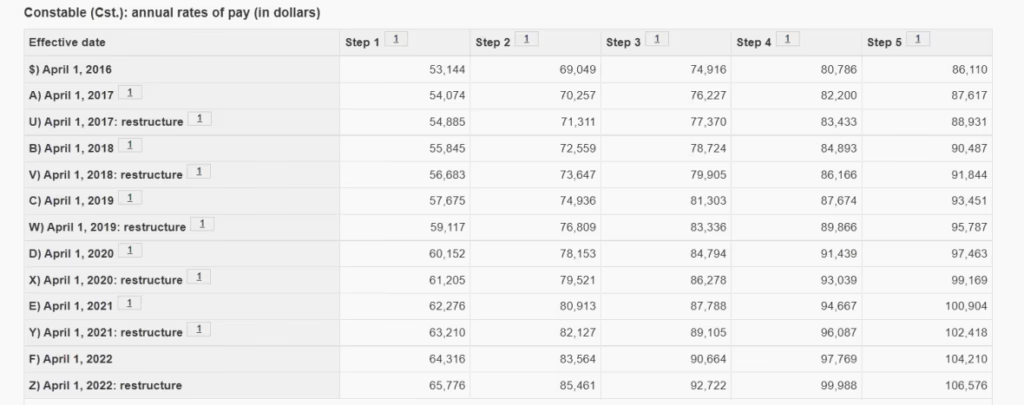
Concrete Salary Examples
According to CBC reporting on the agreement, here’s what the increases meant:
First Class Constable:
- 2016 salary: $86,110
- April 2022 salary: $106,576
- Increase: $20,466 (23.7%)
Corporal:
- 2016 salary: $94,292
- 2022 salary: $116,703
- Increase: $22,411 (23.7%)
Context Comparison: In Fredericton’s municipal police force, a first class constable earned $87,008.66 in 2016 and $97,359.61 in 2020. The RCMP agreement brought Mountie salaries above these municipal rates by 2022.
What This Meant: For the first time in years, RCMP salaries became truly competitive with other Canadian police forces—a critical factor in recruitment and retention.
My Research Insight: When I compared RCMP salaries to other police services during my application research, the post-2021 rates finally made financial sense. Before this agreement, municipal forces in cities like Toronto, Vancouver, and Calgary significantly out-earned RCMP members despite similar duties and risks.
Source: CBC News, Treasury Board Secretariat pay scales
Second Collective Agreement (2023-2025): Building on Progress
The 8% Increase Through Arbitration
When negotiations for the second collective agreement stalled, the matter went to binding arbitration—resulting in an 8% salary increase over two years.
Arbitration Decision (April 2024):
Year 1 (April 1, 2023): 4% increase
- 3% economic increase
- 1% market adjustment
Year 2 (April 1, 2024): 4% increase
- 2% economic increase
- 2% market adjustment
Total: 8.23% compounded increase over two years
One-Time Allowance: $2,500 related to performance of regular duties
Coverage: Approximately 20,000 RCMP members from Constable to Staff Sergeant Major
What Arbitration Means: The arbitration board, chaired by William Kaplan, determined that the National Police Federation and Treasury Board had resolved most issues but needed a third-party decision on compensation.
Why Arbitration Was Necessary: When collective bargaining reaches an impasse, binding arbitration makes sure that essential services like policing continue without strikes while still providing fair compensation mechanisms.
Sources:
RCMP salary and benefits
Police officer pay and benefits
CBC News (April 19, 2024), Union of BC Municipalities, Treasury Board of Canada Secretariat
What the Agreements Include Beyond Salary
The collective agreements addressed critical issues beyond just pay increases—issues that directly affect member wellness and operational effectiveness.
Workload Management and Burnout Prevention
Key Provisions:
- Limits on excessive overtime
- Fatigue management protocols
- Staffing level commitments
- Operational availability (OA) parameter modifications
Why This Matters: RCMP members historically faced chronic understaffing, leading to burnout, mental health struggles, and high attrition rates. Formal workload protections represent a fundamental shift.
Member Wellness Framework: According to collective agreement appendices, the NPF and Treasury Board committed to jointly developing a Member Wellness Working Framework addressing:
- Work-life balance initiatives
- Stress management programs
- Preventive mental health measures
- Peer support systems
Mental Health Support Enhancements
Increased Access to Resources:
- Enhanced Employee Assistance Programs (EAP)
- Confidential counseling services
- Trauma-informed care protocols
- Psychological services for operational stress injuries
Critical Context: Policing involves exposure to traumatic events, violence, death, and high-stress situations. Historically, RCMP members struggled to access adequate mental health support. The collective agreements formalized enhanced access.
My Perspective: As an applicant preparing for a career that will inevitably involve trauma exposure, knowing that full mental health support is now contractually guaranteed—not just organizational goodwill—provides real reassurance.
Equipment and Technology Modernization
Investment Commitments:
- Updated firearms and tactical equipment
- Modern communications technology
- Improved vehicle fleet
- Digital investigation tools
- Body-worn cameras (ongoing rollout)
Why Equipment Matters: Outdated equipment compromises officer safety and operational effectiveness. Contractual commitments to modernization make sure investment stays consistent.
Leave Entitlements and Work-Life Balance
Annual Leave Provisions:
- Vacation leave entitlements
- Personal days
- Religious observance accommodation
- Family-related leave
Hours of Work: Full-time members work an average of 2,087.04 hours per year, inclusive of designated paid holidays and paid leave, according to the collective agreement.
Designated Paid Holidays: Standard federal holidays plus specific provisions for shift workers
My Understanding from Research: The formalization of work hours, leave entitlements, and overtime compensation represents a massive change from the previous system where many of these elements were discretionary or informal.
Sources: RCMP Collective Agreement (Treasury Board), NPF statements
Impact on RCMP Recruitment and Retention
The pay raises and improved working conditions were explicitly designed to address chronic recruitment and retention challenges.
The Recruitment Crisis Context
Historical Challenges:
- RCMP struggled to attract qualified candidates
- Competing police services offered higher salaries
- Long application timelines deterred applicants
- Attrition rates outpaced recruitment
Market Comparison Issue: Before the collective agreements, municipal police forces routinely offered $10,000-$20,000 higher starting salaries than the RCMP, with better benefits and working conditions.
Expected Improvements
National Police Federation Projections:
- Increased applicant pool through competitive compensation
- Reduced attrition among experienced members
- Improved member morale and job satisfaction
- Enhanced ability to staff remote and northern communities
Recruitment Metrics (Early Indicators): While full data isn’t yet available, recruitment offices have reported increased application volumes since the first collective agreement implementation.
Retention Improvements: The combination of salary increases, wellness support, and union representation aims to reduce the trend of experienced members leaving for municipal forces or the private sector.
My Applicant Experience: In conversations with recruitment officers during my application, they’ve emphasized the improved compensation and working conditions as evidence of the RCMP’s commitment to its members. This messaging contrasts sharply with stories I’ve heard from members who joined 10-15 years ago.
Personal Motivation: Knowing that the RCMP now offers competitive pay and formal workplace protections made my decision to pursue this career more financially sound. I’m not sacrificing significant earning potential or workplace rights to become a Mountie—something previous generations of applicants had to accept.
Financial Impact on Municipalities and Contract Policing
The salary increases had significant financial implications for municipalities and provinces that contract RCMP services.
How RCMP Contract Policing Works
Three-Tiered System:
- Federal Policing: 100% federally funded
- Provincial/Territorial Policing: Cost-shared between federal government and provinces/territories
- Municipal Policing: Cost-shared between federal government, provinces, and municipalities
Municipal Cost-Sharing Formula:
- Municipalities under 5,000 population: Provincial responsibility
- Municipalities 5,000-15,000: 70% provincial, 30% municipal
- Municipalities over 15,000: 90% municipal, 10% federal
Financial Concerns and Responses
New Brunswick municipalities and other local governments calculated significant increases to their policing budgets due to the retroactive payments and annual increases.
Municipal Concerns:
- Large one-time retroactive payments (2017-2021)
- Ongoing annual salary increases
- Limited consultation before agreements
- Budget planning challenges
Federation of Canadian Municipalities Response: The FCM lobbied the federal government to cover the retroactive costs for contract policing. Ottawa opted not to provide additional funding, requiring municipalities to absorb the costs.
Union of BC Municipalities Position: BC municipalities raised concerns about:
- Lack of meaningful consultation in the collective bargaining process
- Difficulty absorbing large one-time retroactive costs
- Need for improved communication mechanisms
- Planning challenges for future collective agreements
Federal Government Position: Treasury Board maintained that contract partners were aware that collective bargaining could result in salary increases above or below planning estimates.
Why This Matters: The financial impact on municipalities affects RCMP contract policing sustainability. If costs become prohibitive, some municipalities might consider transitioning to municipal forces—potentially fragmenting Canadian policing.
Sources: Union of BC Municipalities, CBC News, Federation of Canadian Municipalities
Third Collective Agreement Negotiations (2025-2026)
The second collective agreement expired March 31, 2025. Negotiations for a third agreement are underway.
Current Status
As of January 2026, negotiations between the National Police Federation and Treasury Board are in progress. Specific details remain confidential during active bargaining.
Key Issues Expected:
- Continued salary adjustments to maintain market parity
- Enhanced wellness and mental health provisions
- Workload management improvements
- Equipment and technology commitments
- Remote and northern posting compensation
Potential Arbitration: If negotiations reach an impasse, the matter could again proceed to binding arbitration, as occurred with the second agreement.
What This Means for Applicants
For Those Currently Applying: The ongoing collective bargaining demonstrates that RCMP compensation will continue to be negotiated and adjusted—providing long-term career salary predictability.
Career Planning Implications: Unlike the pre-union era when salary increases were uncertain and arbitrary, we can now expect regular negotiated adjustments.
My Take: Entering the RCMP during this era of collective bargaining means my career compensation will be determined through a transparent, formalized process rather than unilateral government decisions. This provides financial planning certainty for major life decisions like buying a home or starting a family.
Commissioned Officers: Separate But Parallel Increases
While the National Police Federation represents members below the rank of Inspector, Commissioned Officers (Inspector and above) receive separate compensation.
Commissioned Officer Pay Raises
RCMP Commissioned Officers received an 8.23% compounded salary increase over two years (2023-24 and 2024-25), structured similarly to the unionized members’ agreement.
Increase Breakdown:
- April 1, 2023: 4% (3% economic increase, 1% market adjustment)
- April 1, 2024: 4% (3% economic increase, 1% market adjustment)
- One-time allowance: $2,500
Example (Inspector):
- 2022 salary: $145,904 – $156,682
- April 2023: $151,784 – $162,996
- April 2024: $157,856 – $169,516
Why Separate Structures: Commissioned Officers are excluded from union representation due to their management and leadership roles. However, Treasury Board aligned their increases with the unionized members to maintain internal equity.
Source: Union of BC Municipalities
Long-Term Implications for Canadian Policing
These historic agreements signal broader shifts in how Canadian policing functions.
Professionalization and Labor Rights
Shift in Policing Culture:
- From paramilitary hierarchy to professional labor relations
- From discretionary management to contractual protections
- From individual grievances to collective representation
Broader Trend: The RCMP’s unionization reflects global trends toward police labor rights and professional associations.
Competitive Policing Labor Market
Market-Driven Compensation: With collective bargaining, RCMP salaries will remain responsive to market rates in other police forces, creating:
- Ongoing pressure for competitive compensation across Canadian policing
- Standardization of police pay and benefits
- Potential upward pressure on municipal police budgets
Federal Policing Sustainability
Financial Questions:
- Can the federal government sustain competitive policing salaries long-term?
- Will contract policing remain financially viable for municipalities?
- How will future agreements balance fiscal constraints with recruitment needs?
Operational Implications: Improved compensation and working conditions should improve the RCMP’s ability to:
- Recruit highly qualified candidates
- Retain experienced investigators and specialists
- Staff difficult postings (remote, northern, high-cost areas)
- Compete with private sector opportunities for skilled professionals
Impact on Policing Standards
Potential Positive Outcomes:
- Better-compensated officers with improved morale
- Enhanced professionalism through workplace protections
- Reduced turnover ensuring experienced policing
- Improved mental health support reducing officer-involved incidents
Potential Challenges:
- Municipal budget pressures affecting policing resources
- Complexity of multi-party bargaining (federal, NPF, provincial, municipal stakeholders)
- Balancing operational needs with contractual protections
My Perspective: As someone entering policing at this key moment, I see these changes as overwhelmingly positive. Better pay, formal workplace protections, and mental health support create conditions for long, sustainable careers in policing—benefiting both officers and the communities we’ll serve.
What These Agreements Mean for Current Applicants
As someone actively in the RCMP application process, here’s what these historic changes mean for aspiring members:
Financial Considerations
Starting Salary Competitiveness: RCMP constable salaries are now genuinely competitive with municipal forces. You’re not making a significant financial sacrifice to join the RCMP.
Long-Term Earning Potential: With formalized collective bargaining, you can expect:
- Regular negotiated salary increases
- Market adjustments to maintain parity
- Transparent pay scales and progression
Career Planning: Unlike previous eras where compensation was uncertain, you can now research current collective agreements and plan financially based on established pay scales.
Working Conditions
Contractual Protections: From day one at Depot, you’ll have:
- Union representation
- Grievance procedures
- Formalized work hours and leave entitlements
- Mental health support commitments
- Equipment and safety guarantees
Work-Life Balance: The collective agreements formalize limits on excessive workload and provide mechanisms to address burnout—critical for long-term career sustainability.
Professional Development
Investment in Members: The agreements signal federal government commitment to:
- Proper equipment and technology
- Ongoing training and development
- Wellness and mental health support
- Safe working conditions
Career Longevity: Improved conditions mean you can realistically envision a 25-30 year RCMP career without burning out or facing financial pressure to leave for better opportunities.
My Honest Assessment
Why I’m Still Applying Despite Challenges:
The RCMP application process is long, demanding, and competitive. Physical fitness requirements are rigorous. Training at Depot is intense. The job involves real danger, trauma exposure, and difficult postings.
But the historic collective agreements fundamentally changed the value proposition:
Before 2021: Join the RCMP despite lower pay, uncertain working conditions, and limited protections.
After 2021: Join the RCMP with competitive compensation, formalized workplace rights, and full support systems.
This shift doesn’t eliminate the challenges of policing—but it makes sure those challenges are met with fair compensation, workplace protections, and organizational support.
Personal Decision: These agreements were a significant factor in my decision to pursue the RCMP over municipal forces. The combination of diverse federal mandate, national reach, specialized units, and now competitive compensation made the RCMP the right choice.
Conclusion: A New Era for RCMP Members
The historic collective agreements of 2021 and 2024 represent the most significant transformation in RCMP employment conditions in the force’s 150-year history.
Key Takeaways
Financial Reality:
- 23.7% salary increase (2017-2023)
- 8% salary increase (2023-2025)
- Ongoing collective bargaining making sure compensation stays competitive
Workplace Transformation:
- Union representation and collective bargaining rights
- Formalized working conditions and protections
- Enhanced mental health and wellness support
- Equipment and technology modernization
Career Implications:
- Competitive compensation with other police forces
- Transparent, negotiated pay structures
- Improved work-life balance
- Long-term career sustainability
Broader Significance:
- Professionalization of policing labor relations
- Enhanced RCMP recruitment and retention capacity
- Financial pressures on contract policing sustainability
- Potential improvements in policing quality through better member support
Looking Forward
As third collective agreement negotiations proceed, the RCMP’s evolution from traditional paramilitary hierarchy to professional law enforcement agency with modern labor relations continues.
For those of us applying to join, we enter an organization fundamentally different from the RCMP of even five years ago—one where our workplace rights, compensation, and wellbeing are contractually protected and collectively negotiated.
My Commitment: As I progress through the application process toward Depot training, I’m joining an RCMP that finally values its members through fair compensation and formalized protections. This isn’t just about money—it’s about respect, sustainability, and building careers where we can effectively serve Canadians for decades to come.
The historic pay raises secured after extended negotiations represent more than salary increases—they represent the RCMP’s commitment to becoming an employer of choice in Canadian policing.
About the Author
Ait is currently working through the RCMP application process and documents his journey to help fellow applicants. With a focus on real-world experiences, fitness preparation, understanding compensation and benefits, and decoding RCMP requirements, Ait provides authentic insights into what it actually takes to become a Mountie in the modern era.
His perspective comes from:
- Active participation in the RCMP application process
- Research into collective agreements and labor relations
- Conversations with serving members and recruitment officers
- Study of RCMP history, structure, and ongoing transformation
- Analysis of Canadian policing labor markets and compensation
Primary Sources:
- RCMP Regular Members and Reservists Collective Agreement (Treasury Board of Canada Secretariat)
- CBC News reporting (April 2024, August 2021)
- National Police Federation communications
- Union of BC Municipalities documentation
- Treasury Board of Canada Secretariat pay scales
- Public Safety Canada information
- Federation of Canadian Municipalities reports
Interested in learning more about RCMP recruitment, application requirements, or career information? Explore detailed guides at JoinRCMP.ca
The collective agreements addressed critical issues beyond just pay increases—issues that directly affect member wellness and operational effectiveness.
The pay raises and improved working conditions were explicitly designed to address chronic recruitment and retention challenges.
The salary increases had significant financial implications for municipalities and provinces that contract RCMP services.
This article reflects current RCMP policy based on official government documentation. Eligibility and suitability decisions are assessed on a case-by-case basis during the application process.