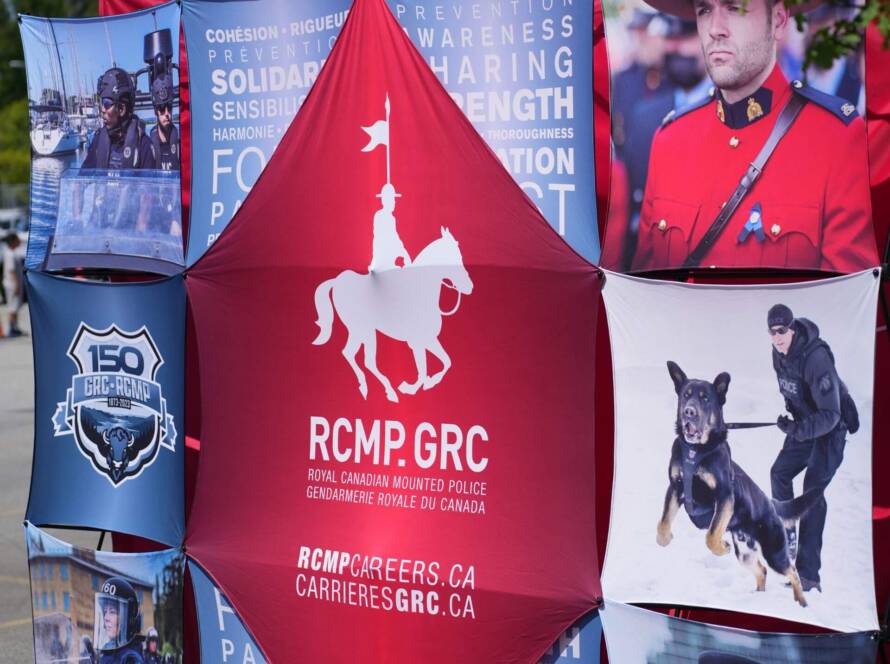


Is the RCMP Hiring Right Now? (2026 Recruitment Status)
Quick Answer:Yes, the RCMP is hiring right now. As of 2026, the force is in the middle of its most aggressive recruitment campaign in decades, driven by a critical officer shortage and a growing RCMP retention problem that has seen experienced officers quit at increasing rates. A new five-year national strategy. Applications are open for Regular Members (police officers), Civilian Members, and Public Service employees — and the demand for new recruits is nearly three times the current hiring target.
For the full application walkthrough, see our how to join the RCMP guide.
How Many RCMP Positions Are Open?
The numbers tell the story. According to the Auditor General of Canada’s 2026 report, the RCMP needed 3,413 frontline officers in fiscal year 2025–26 alone. The official hiring target for that same period was only 1,195 — meaning the actual demand was nearly three times what was planned for.
Breaking that down further: the force requires 2,213 Regular Members just to stabilize existing operations, plus an additional 1,000 personnel dedicated to a federal policing expansion covering cybercrime, financial crime, transnational organized crime, and border integrity.
Vacancy rates have exceeded the 7% critical threshold in 9 of 11 provinces and territories served by the RCMP. In some northern divisions, vacancies run significantly higher, creating workload pressure on existing members and fast-tracking advancement opportunities for new graduates.
Why Is the RCMP Hiring So Aggressively in 2026?
Two forces are driving the current hiring surge: ongoing attrition and a major strategic expansion.
On the attrition side, the RCMP loses a significant number of officers every year to retirement, departure, and career transitions. Despite consistent recruiting efforts over the past several years, the total Regular Member population has barely grown. The AG report found that between 2023 and 2025, recruitment targets were often less than half of what operational needs actually required.
On the expansion side, the National Recruitment Strategy 2026–2029 — published by the RCMP in 2025 — marks a deliberate pivot toward complex federal mandates. The force is building out hybrid teams of traditional officers and civilian specialists to tackle threats at the intersection of physical and digital infrastructure. This requires a broader, more diverse workforce than previous recruiting models were designed to produce.
What Positions Is the RCMP Recruiting For?
The current hiring push covers three main employment categories:
| Category | Examples | Governed By |
|---|---|---|
| Regular Member (RM) | Police officer / Constable | RCMP Act |
| Civilian Member (CM) | Dispatcher, civilian investigator, IT specialist, psychologist | RCMP Act |
| Public Service Employee | Administrative, HR, finance, research, legal support | Public Service Employment Act |
The current 1,000-personnel federal expansion is particularly focused on Civilian Criminal Investigators (CCIs), software engineers, and telecom specialists — roles that don’t require carrying a firearm but do require a security clearance and often a 24-month police sciences training program.
For a full breakdown of what each category looks like day-to-day, see our guide to RCMP jobs in Canada and the separate overview of RCMP career specializations.
New 2026 Incentives: What’s Changed for Applicants
The RCMP has made several significant changes to make joining more attractive and financially accessible:
Cadet Allowance Nearly Doubled
As of April 1, 2026, the weekly allowance for cadets in training at Depot Division jumped from $525 to $1,000 per week. Room, board, and travel to and from Regina are also fully covered by the RCMP. This change was specifically designed to remove the financial barrier that was deterring otherwise qualified candidates from applying.
Flexible Posting Plan Ended
In July 2025, the RCMP phased out the Flexible Posting Plan. New graduates are now assigned to postings based on operational need rather than personal preference. This means you need to be genuinely willing to relocate anywhere in Canada — it’s not just a formality on the application form.
Digital Security Screening Portal
A new security screening portal accessible via GCKey allows applicants to submit documents electronically, track their application status, and respond to investigator inquiries in real time. This is part of the RCMP’s push to reduce the average processing time, which had stretched to approximately 330 days at its peak.
What Are the Basic Qualifications to Join the RCMP?
To be eligible for a Regular Member (police officer) position, you must meet all of the following:
- Canadian citizen or permanent resident (at least 1,095 days in Canada in the last 5 years)
- At least 18 years old
- Valid Canadian driver’s licence
- Able to obtain a Top Secret security clearance
- No disqualifying criminal record (conditional discharges may be considered depending on circumstances)
- Meet RCMP medical, vision, and hearing standards
- Pass the Physical Fitness Assessment (PFA)
For the complete list of requirements including medical standards and the fitness test, see the RCMP eligibility requirements.
Do You Need a Degree to Join the RCMP?
No. The RCMP does not require a university degree to become a Regular Member (police officer). The minimum academic requirement is a Canadian secondary school diploma (Grade 12) or equivalent. The officer track is open to candidates without any post-secondary education.
Some college or university background can strengthen an application — particularly in criminology, law, psychology, or Indigenous studies — but it is never a prerequisite. Specific civilian and specialist roles (forensic accountants, engineers, some CCI positions) may require relevant post-secondary credentials, but those are role-specific requirements, not force-wide ones.
What Salary Does an RCMP Officer Earn?
RCMP Regular Members follow a structured pay scale set by collective agreement. The Constable progression as of the current NPF contract:
| Stage | Annual Salary |
|---|---|
| Day 1 (Depot graduate) | $71,191 |
| 6 months (Field Coaching complete) | $92,497 |
| 12 months | $100,356 |
| 24 months | $108,220 |
| 36 months (max Constable) | $115,350 |
Officers posted to remote or isolated communities receive location allowances on top of base pay. The full salary breakdown across all RCMP ranks is covered in the RCMP salary guide.
What Benefits Does the RCMP Offer?
- Defined benefit pension: Officers who complete 25 years of service can retire with a full pension at any age. The pension formula is 2% x best 5-year average salary x years of service, fully indexed to CPI.
- Health and dental: Comprehensive coverage through the Public Service Health Care Plan (PSHCP) and Public Service Dental Care Plan (PSDCP), covering the member and eligible dependants.
- Relocation assistance: When officers are posted to a new detachment, the RCMP covers moving expenses under the National Joint Council Relocation Directive.
- Uniforms and equipment: All gear is issued and maintained at no cost.
- Group life insurance: Included as part of the federal employee benefits package.
- Isolated Posts allowances: $8,000 to $40,000+ per year for remote and northern postings.
What Is RCMP Training Like? (Depot Division, Regina)
All Regular Member candidates attend Depot Division — the RCMP’s national training academy located in Regina, Saskatchewan. Cadet Training lasts 26 weeks (six months) and covers criminal law, Charter rights, firearms, defensive tactics, police driving, and scenario-based assessments in simulated detachments.
Cadets live on-site at Depot in a troop of approximately 32 recruits. As of April 2026, cadets receive $1,000 per week during training, with room, board, and travel to and from Regina fully covered by the RCMP.
For the complete Depot overview: RCMP Depot: The Complete 2026 Guide.
What Background Checks Does the RCMP Require?
- Criminal record check — searched against CPIC and local police databases
- Credit and financial history review — outstanding debts, bankruptcies, and financial patterns are assessed
- Polygraph examination — required as part of the security screening process for all RM candidates
- Field investigation — RCMP investigators interview your personal references, professional references, neighbours, and former employers in person
- Top Secret security clearance — required for all Regular Members; renewed periodically throughout a career
How Long Does It Take to Get Hired?
Processing is slow — the AG report found the RCMP missed its target processing time on 97% of applications. The average end-to-end timeline from application to a training offer has been around 330 days, though the new digital portal and added resources are aimed at bringing that down.
Of the roughly 46,000 applications received over a recent 30-month window, approximately 6% resulted in training offers. That’s not a rejection rate — it reflects a combination of applicants who withdrew, didn’t meet eligibility, or didn’t progress through each stage of the multi-step process.
Yes, the RCMP is hiring. The gap between available positions and qualified candidates is real and significant. What often gets missed is the timeline reality: 330 days from first application to a Depot offer is the average. That is not a deterrent — it is a planning tool. Applicants who start strong files now are the ones receiving conditional offers in late 2026 and early 2027. The demand is not in question. The processing window is what requires patience. Start the file, keep your record clean, build your fitness, and let the timeline work.
How to Apply to the RCMP Online
- Go to rcmp.ca/en/careers-rcmp
- Click “Become a Regular Member” and review the eligibility checklist
- Create a GCKey account (or sign in with your existing Government of Canada account)
- Complete the online application form — personal history, education, employment, and references
- Submit and note your application number (you’ll need it for all future correspondence)
For Civilian Member and Public Service roles, search jobs.gc.ca and filter by “Royal Canadian Mounted Police” as the hiring department.
How to Contact RCMP Recruitment
- Website: rcmp.ca/en/careers-rcmp
- National Recruiting Centre phone: 1-855-787-2671 (1-855-RT-RCMP1)
- Contact form: Available through the careers portal at rcmp.ca
FAQ: Is the RCMP Hiring Right Now?
Yes. The RCMP is actively accepting applications for Regular Members, Civilian Members, and Public Service employees. The force needs over 3,400 officers to fill critical vacancies across most provinces and territories.
The RCMP requires approximately 3,413 frontline officers in fiscal year 2025-26 alone, against a target of only 1,195. An additional 1,000 positions are being created for a federal policing expansion.
The average processing time has been approximately 330 days from application to a training offer. The RCMP missed its target processing time on 97% of applications per the 2026 Auditor General report.
Yes. As of April 1, 2026, the cadet training allowance was nearly doubled from $525 to $1,000 per week. After graduating, Constables start at $71,191 and reach $115,350 within 36 months.
Yes. The RCMP employs Civilian Members and Public Service Employees in roles like dispatcher, civilian criminal investigator, IT specialist, and psychologist. These roles don’t require Depot training or carrying a firearm.
RCMP constables start at $71,191 per year on their first day after graduating from Depot. The pay grid reaches $92,497 at 6 months and $115,350 at 36 months. Cadets earn $1,000 per week during Depot training.
Sources:
Regular member recruitment | Royal Canadian Mounted Police
Regular member hiring process | Royal Canadian Mounted Police
This article reflects current RCMP policy based on official government documentation. Eligibility and suitability decisions are assessed on a case-by-case basis during the application process.