


RCMP Sergeant Salary 2026: $133,677/Year Full Pay Guide
For the complete pay grid, benefits, and take-home estimates, see our RCMP salary guide.
Complete 2026 Compensation Guide
Quick Answer:
RCMP sergeant salary is $133,677 annually in 2026, translating to approximately $7,043 per month. This represents a significant increase from constable levels and reflects their leadership responsibilities supervising teams of officers and managing complex operational duties.
The RCMP offers one of Canada’s most competitive compensation packages for sergeant-level officers. Understanding RCMP sergeant salary structures helps both current members planning career advancement and potential recruits considering their future earning potential in Canada’s premier law enforcement organization.
Constable pay rises on a fixed grid — you do not need a promotion to move from $71,191 toward $115,350. Map cadet allowance, base salary, overtime, and isolated-post allowances separately when you budget for Depot and your first posting.
How Much Do RCMP Sergeants Make in 2026?
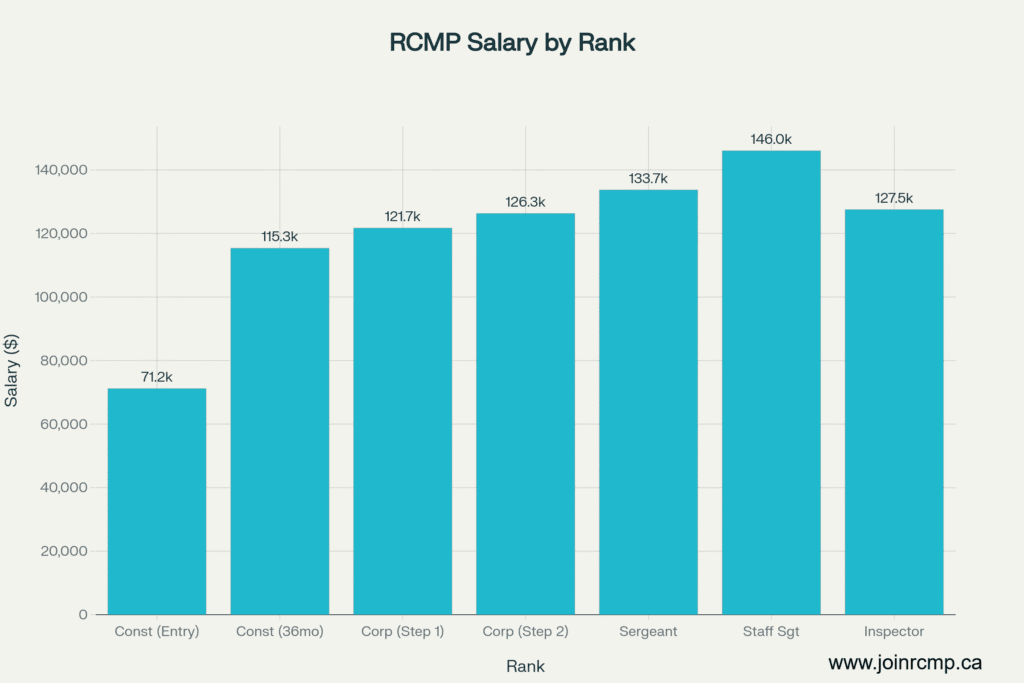
The current RCMP sergeant salary for 2026 is $133,677 annually. This figure represents the base salary before additional allowances, overtime, or specialized duty pay. Breaking this down further:
- Annual salary: $133,677
- Monthly pay: $7,043 (before deductions)
- Bi-weekly pay: Approximately $5,141
- Hourly equivalent: Roughly $64.27 (based on standard work year)
This salary reflects recent adjustments made through collective bargaining. An arbitration decision awarded RCMP members an 8% salary increase over two years, with 4% increases effective April 1, 2023, and April 1, 2024. These increases make sure RCMP compensation remains competitive with other police forces across Canada.
Salary Progression Timeline
The progression to RCMP sergeant salary typically follows this timeline:
- Entry level constable: $71,191
- After 36 months: $115,350 (senior constable)
- Corporal Step 1: $121,691
- Corporal Step 2: $126,311
- Sergeant: $133,677
The jump from RCMP corporal salary to sergeant represents a significant increase of approximately $7,366 annually, reflecting the enhanced leadership responsibilities that come with the rank.
What Are the Ranks in the RCMP?
Understanding the RCMP rank structure helps contextualize sergeant positions within the broader organizational hierarchy. The RCMP operates with distinct non-commissioned and commissioned officer ranks:
Non-Commissioned Officer Ranks
- Constable (entry level): $71,191–$115,350
- Corporal: $121,691–$126,311
- Sergeant: $133,677
- Staff Sergeant: $146,019
- Sergeant Major: $150,524 (approximate)
Commissioned Officer Ranks
- Inspector: $125,000–$140,000
- Superintendent: $140,000–$155,000
- Chief Superintendent: $155,000–$170,000
- Assistant Commissioner and above: $170,000+
The sergeant rank sits at a key junction between front-line policing and management. This positioning makes sergeants eligible for specialized units, training roles, and further advancement opportunities that significantly impact long-term earning potential.
For detailed salary comparisons across all levels, our detailed analysis of RCMP salaries by rank provides current compensation data for each position.
What Does a Sergeant Do in the RCMP?
RCMP sergeants hold critical supervisory responsibilities that justify their enhanced compensation structure. Their role encompasses both operational leadership and administrative coordination:
Daily Operational Duties
Sergeants supervise and coordinate activities of uniform officers and personnel engaged in providing police services. They respond to complex incidents, make critical decisions under pressure, and make sure proper protocols are followed during investigations. This includes overseeing crime scene management, coordinating with other agencies, and making sure evidence collection meets legal standards.
Leadership and Management
The leadership aspect cannot be understated. These officers manage team schedules, conduct performance evaluations, and provide guidance to junior officers. They serve as the primary point of contact between frontline officers and higher-ranking officials, communicating important policy changes and operational directives.
Training and Development
Sergeants play a key role in training new officers and mentoring those seeking career advancement. They oversee field training programs, evaluate officer performance, and identify areas where additional training may be needed. This responsibility helps maintain the high standards expected of RCMP officers across all divisions.
How Important Is the RCMP Sergeant in Law Enforcement?

RCMP sergeants serve as the backbone of effective law enforcement operations, making their role critical to public safety and organizational success. Their importance extends across multiple dimensions:
Operational Continuity: Sergeants bridge the gap between strategic decision-making at higher levels and practical implementation at the ground level. This makes them essential for maintaining operational continuity and making sure public safety standards are met consistently.
Unit Morale and Development: They help maintain morale within their units, provide important feedback to senior leadership about operational challenges, and serve as role models for junior officers aspiring to advance their careers.
Crisis Response: Their experience and judgment often prove extremely helpful during complex investigations and emergency situations, where quick decision-making and resource coordination are essential.
Quality Assurance: Sergeants make sure that investigations meet professional standards, evidence handling follows protocols, and public complaints receive appropriate attention.
The critical nature of these responsibilities justifies the substantial RCMP sergeant salary increase compared to constable positions and explains why organizations invest heavily in quality supervisory leadership.
What Benefits Supplement RCMP Sergeant Salaries?
Beyond the base RCMP sergeant salary, officers receive a comprehensive benefits package that significantly enhances their total compensation:
Health and Wellness Benefits
RCMP sergeants receive full medical and dental coverage for themselves and their dependents. This includes basic healthcare through provincial systems plus supplemental health care benefits provided at no cost to members. The force also provides occupational health care for work-related injuries and illnesses.
Pension and Retirement Benefits
The RCMP pension plan offers substantial long-term security. Officers can:

- Retire with penalties after 20 years of service
- Receive full pension benefits after 25 years
- Reach maximum pension levels after 35 years
This structured approach provides clear retirement planning goals and financial security that add significant value to the total compensation package.
Leave and Time Off
Vacation entitlements increase with service length:
- 15 days annually for new officers
- 30 days for those with 23 or more years of service
- 8 hours of wellness leave annually
- 40 hours of family-related leave
These benefits support work-life balance, which is important in demanding law enforcement careers.
Additional Allowances
Several allowances can supplement the base sergeant salary:
- Bilingual officers: $800 annual bonus
- Operational clothing allowances: $300–$1,500 annually
- Isolated post allowances: Environment allowances and living cost differentials
- Educational reimbursement: Up to $1,500 annually for relevant continuing education
How Do RCMP Sergeant Salaries Compare to Other Police Forces?
RCMP sergeant salaries are competitive with major municipal police forces across Canada:
| Police Force | Sergeant Salary Range |
|---|---|
| RCMP | $133,677 |
| Surrey Police | $146,387–$158,585 |
| Delta Police | $146,508 |
While some municipal forces offer slightly higher base salaries, the RCMP’s comprehensive benefits package often makes the total compensation competitive. The federal benefits structure, pension plan, and transfer opportunities across Canada provide unique advantages that many officers find valuable for long-term career planning.
What Affects RCMP Sergeant Salary Growth?
Several factors influence how the RCMP sergeant salary may change over time:
Collective Bargaining Agreements
The National Police Federation represents RCMP members below inspector rank, including sergeants. Regular collective bargaining makes sure salaries remain competitive with other police forces and keep pace with inflation. Recent negotiations resulted in the 8% increase over two years, demonstrating ongoing commitment to fair compensation.
Market Adjustments
The federal government recognizes that RCMP officers have skills easily transferable to other police agencies. To retain skilled personnel, compensation must remain competitive with municipal and provincial police forces. This market-driven approach helps make sure RCMP salaries stay aligned with industry standards.
Geographic Considerations
While base salaries remain consistent across Canada, various allowances can significantly impact total compensation. Officers serving in remote or isolated locations receive additional allowances that can substantially increase their effective salary, recognizing the challenges of policing in diverse Canadian environments.
How to Become an RCMP Sergeant
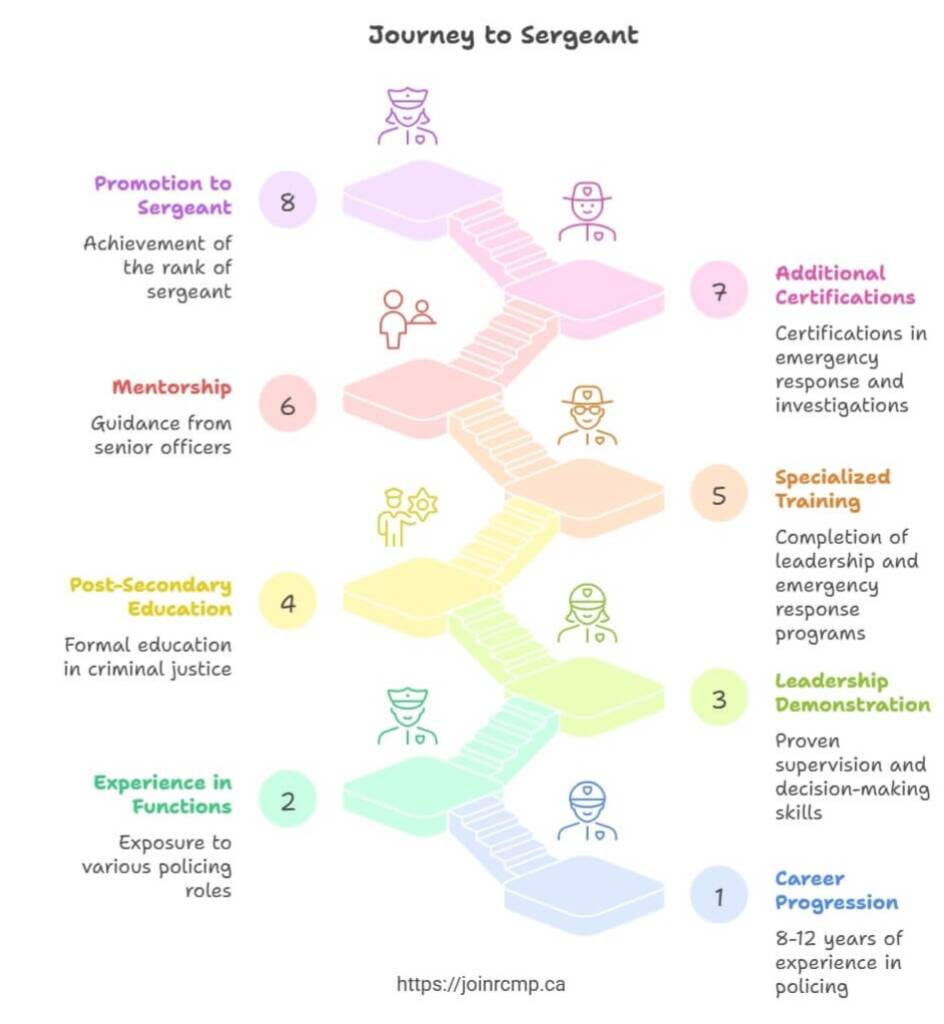
Advancement to sergeant typically requires several years of experience and demonstrated leadership capabilities:
Experience Requirements
- Career progression timeline: 8–12 years from entry-level constable to sergeant
- Experience in various policing functions: From general duty assignments to specialized units
- Leadership demonstration: Proven capabilities in supervision and decision-making
Educational and Training Requirements
While specific educational requirements vary, most sergeants benefit from:
- Post-secondary education in criminal justice, law enforcement, or related fields
- Specialized training programs and leadership development
- Mentorship from senior officers
- Additional certifications in areas like emergency response or investigations
The promotion process evaluates leadership potential, performance evaluations, specialized training completion, and demonstrated competencies in investigation skills, community relations, and operational knowledge.
Regional Variations and Additional Opportunities
Geographic Allowances
Officers serving in challenging locations receive substantial additional compensation:
- Northern Canada postings: $10,000–$20,000 additional annually
- Remote communities: Isolation allowances and housing subsidies
- Vacation travel assistance for isolated assignments
Extra-Duty Pay Opportunities
RCMP sergeants are eligible for various types of additional compensation:
- Overtime pay: Time-and-a-half for hours exceeding regular schedules
- Shift premiums: Additional pay for evening and night shifts
- Court duty compensation: Payment for testimony and legal proceedings
- Specialized assignment bonuses: Enhanced pay for specialized units
These additional payments can significantly increase annual earnings beyond the base RCMP sergeant salary.
Career Advancement Beyond Sergeant
Understanding long-term earning potential helps officers evaluate the sergeant position within broader career trajectories:
- RCMP staff sergeant salary: $146,019 annually
- Inspector positions: $125,000–$140,000 depending on assignment
- Superintendent ranks: $140,000–$155,000
- Senior executive positions: $170,000+ for Assistant Commissioner and above
The detailed RCMP salaries by rank structure shows clear advancement opportunities with substantial salary increases at each level.
Conclusion
The RCMP sergeant salary of $133,677 annually represents a significant milestone in Canadian law enforcement careers. This compensation reflects the important leadership role sergeants play in maintaining public safety across Canada’s diverse communities. Combined with a comprehensive benefits package, pension plans, and advancement opportunities, the position offers both financial security and professional fulfillment.
Recent salary increases demonstrate the government’s commitment to maintaining competitive pay scales that attract and retain skilled officers. The comprehensive benefits package, including health coverage, pension benefits, and various allowances, makes RCMP sergeants some of the most competitive employment packages in Canadian public service.
For those considering a career with the RCMP or current officers planning advancement, the sergeant rank provides an excellent balance of leadership responsibility and competitive compensation, with clear pathways for continued career growth and enhanced earning potential.
Frequently Asked Questions
Yes, RCMP sergeants are eligible for overtime, shift premiums, callback pay, court duty compensation, and travel time allowances that can significantly increase annual earnings beyond the base salary.
RCMP sergeant positions are typically full-time roles due to their supervisory responsibilities. However, the force offers various work arrangements and accommodations depending on operational needs and individual circumstances.
While specific educational requirements vary, most sergeants benefit from post-secondary education in criminal justice or related fields. The RCMP provides educational reimbursement up to $1,500 annually for relevant continuing education.
Yes, beyond regular salary adjustments through collective bargaining, sergeants can increase earnings through overtime, specialized assignments, bilingual bonuses, and geographic allowances. Leadership roles in specialized units may also provide additional compensation opportunities.
The RCMP sgt salary at sergeant rank is $133,677 per year as of 2026. The RCMP staff sergeant salary rises to $146,019 annually. Both are set through the National Police Federation collective agreement.
For a full breakdown of all RCMP ranks including NCO pay, see the RCMP Salaries by Rank in Canada guide.
Sources:
RCMP salary and benefits
Police officer pay and benefits
This article reflects current RCMP policy based on official government documentation. Eligibility and suitability decisions are assessed on a case-by-case basis during the application process.