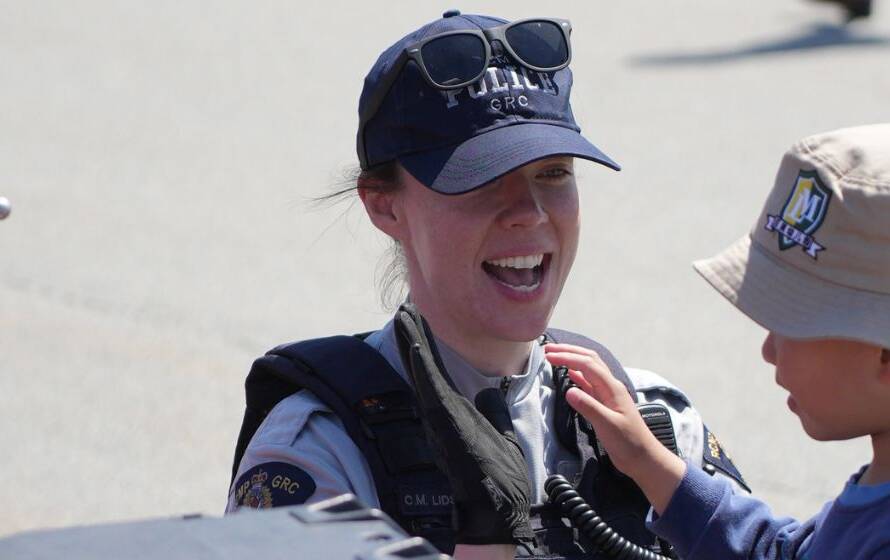


What Are the Steps to Get Into the RCMP?
For the full application walkthrough, see our how to join the RCMP guide.
What Are the Steps to Get Into the RCMP?
Quick Answer:By Ait , law enforcement analyst
Getting into the RCMP involves nine key steps: submitting an online application, attending a career presentation, completing an entrance assessment, submitting required documents, passing a suitability interview, undergoing medical and psychological evaluations, completing a background investigation, and finally attending the 26-week Cadet Training Program at Depot in Regina, Saskatchewan. The entire process typically takes 8–12 months.
The RCMP process is staged — delays usually come from document gaps, medical backlog, or security screening, not from a single “failed” step. Track each stage and fix blockers before they compound.
Meet the Eligibility Requirements First
Before pursuing the steps to get into the RCMP, you must meet core eligibility criteria. You need to be a Canadian citizen or permanent resident who has lived in Canada for at least 1,095 days (3 years) in the past 5 years. You must be at least 18 years old, hold a valid unrestricted Canadian driver’s license, and have a high school diploma or equivalent.
You also need fluency in English or French, good vision and hearing, and the physical ability to carry and use firearms. Most importantly, you cannot have unpardoned criminal convictions, dishonorable discharge from police or military service, or criminal activity within one year of applying.
The Nine Steps to Get Into the RCMP
Step 1: Submit Your Online Application
Head to the Government of Canada’s GC Jobs website and search for “police officer” under jobs open to the public. Complete your application carefully. If screened out, you must wait 6 months before reapplying.
Step 2: Attend the Career Presentation
If your application passes screening, you’ll be invited to an RCMP career presentation. Recruiters explain what police work involves and answer your questions. Your conduct and engagement during this session may be evaluated.
Step 3: Complete the Online Entrance Assessment
You’ll receive a link to complete this assessment within 14 days. The 55–70 minute evaluation tests six areas: workstyle preferences, language comprehension, numerical skills, spatial skills, memory quotient, and business reasoning. If unsuccessful, wait 3 months before reapplying.
Step 4: Submit Required Forms and Documents
A Recruiting Analyst will contact you with a 14-day deadline to submit documents through a secure portal. Required forms include vision and hearing examination reports, your applicant questionnaire, and a suitability screening form. You’ll also need your birth certificate, proof of education, driver’s license, health card, and a first aid certificate.
Step 5: Complete Your Suitability Interview
This two-part interview assesses your competencies and character. The first part tests problem-solving, teamwork, communication, and self-control through behavioral questions using the STAR technique. The second part, the Regular Member Applicant Questionnaire interview, focuses on your personal history and honesty. Background checks and possible polygraph testing verify your statements.
Step 6: Undergo Medical and Psychological Assessments
You’ll see RCMP-designated physicians and psychologists. Psychological screening evaluates whether you possess necessary mental health attributes for the role. Medical screening assesses your fitness for critical tasks like operational driving, firearms use, physical confrontation, and decision-making under stress.
Step 7: Complete a Field Investigation and Security Assessment
Investigators conduct a thorough 10-year background check covering employment, education, finances, drug use, online activities, and criminal history. If you’ve spent more than 6 consecutive months outside Canada, detailed documentation is required.
Step 8: Receive Your Training Assignment
After passing all steps, the RCMP contacts you to attend the Cadet Training Program at Depot in Regina, Saskatchewan.
Step 9: Complete 26-Week Cadet Training
The final step to get into the RCMP is completing the intensive training program. Cadets live in dormitory accommodations and receive training in applied police sciences, firearms, defensive tactics, police driving, physical fitness, legal studies, and ethics. The RCMP provides accommodation, meals, uniforms, and equipment. Upon graduation, you become a constable and begin general duty policing at a location assigned across Canada.
Key Considerations for Your Journey
Timeline varies. While the steps to get into the RCMP typically take 8–12 months, some applications may extend to 18–24 months depending on complexity and division workload.
Honesty is critical. Any gaps, omissions, or inaccuracies in your application or interviews can result in immediate termination. Background checks verify everything you state.
You must be willing to relocate. Once you complete the steps to get into the RCMP, you accept assignment anywhere in Canada based on operational needs.
What Are the Steps to Get Into the RCMP : FAQ
The full application process typically takes 8–12 months, though some cases extend to 18–24 months depending on investigation complexity and divisional processing times.
Yes. If you’re screened out at the application stage, wait 6 months. If you fail the entrance assessment, wait 3 months. Other stages may have different timelines outlined in your rejection letter.
After graduating from Cadet Training at Depot, you become a constable and begin general duty policing at an RCMP detachment assigned across Canada.
Related Resources
Learn more about the RCMP Recruitment process and explore RCMP Depot training details. For detailed application information, visit the official RCMP application guide.
about the Author
Ait is a law enforcement analyst and currently going through the RCMP application process and documents his journey to help fellow applicants. With a focus on real-world experiences, fitness preparation, and understanding RCMP requirements, Ait provides authentic insights into what it actually takes to become a Mountie.
His perspective comes from firsthand experience with:
- RCMP application requirements and processes
- Physical fitness testing
- Research into RCMP history, structure, and mandate
- Conversations with serving RCMP members
- Study of Canadian law enforcement and security frameworks
Ait writes from the perspective of an informed applicant, His content reflects thorough research and genuine experience with the application process.
Sources:
Regular member recruitment | Royal Canadian Mounted Police
Regular member hiring process | Royal Canadian Mounted Police
This article reflects current RCMP policy based on official government documentation. Eligibility and suitability decisions are assessed on a case-by-case basis during the application process.