

Project Red Serge: BC & Yukon RCMP Hiring (2026)
This article reflects current RCMP policy based on official government documentation. Eligibility and suitability decisions are assessed on a case-by-case basis during the application process.
Project Red Serge is the new BC RCMP hiring process, launched February 2026. It applies to BC and Yukon residents only. The Physical Fitness Assessment and indices checks now happen earlier, one recruiter owns your file start to finish, and the steps run faster than before.
If you are starting from scratch and want the full RCMP application pillar, see our step-by-step application guide for the broader picture. This page focuses specifically on what changed in BC and Yukon.
What is Project Red Serge?
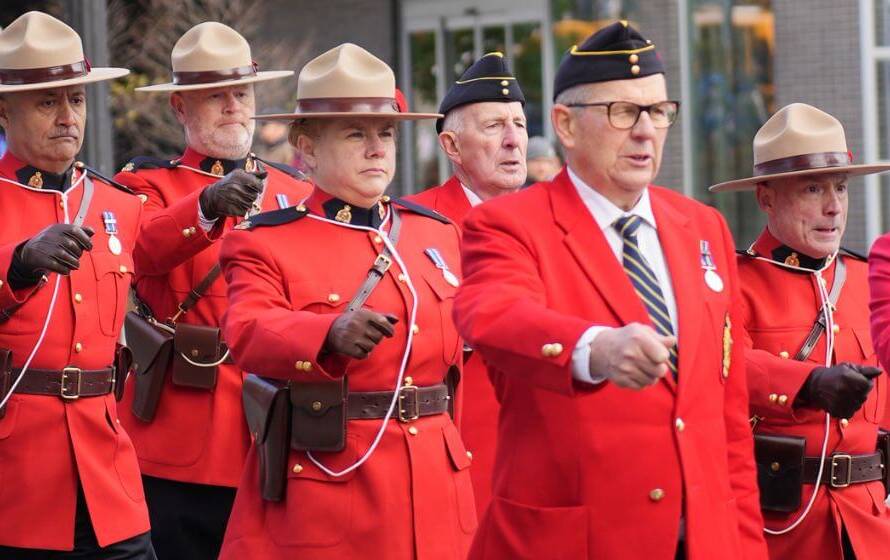
Project Red Serge is the name BC RCMP and Yukon RCMP gave to their redesigned police officer hiring process. It went live in early 2026 and replaces the previous BC and Yukon pipeline. The name itself comes from the RCMP’s iconic dress uniform, a small nod to the tradition applicants are working toward.
The redesign does three things at once:
- It moves the Physical Fitness Assessment (PFA) earlier, so applicants know they can meet the standard before they invest months in the rest of the process.
- It moves indices (police record) checks earlier as well, so the file is cleared faster.
- It keeps each applicant with one regional recruiter from intake all the way through to Depot troop placement. Before Project Red Serge, files bounced between national processing and the regional office.
In short, the BC RCMP hiring process now runs from the division, not from a national queue. For anyone planning a Yukon RCMP apply strategy, the same division owns your file from day one.
According to the official landing page, “BC RCMP and Yukon RCMP have launched a new recruiting process called Project Red Serge, which will allow all police officer applications from BC and Yukon to be processed, from intake to troop placement right from the division.” The RCMP also states the goal is to “encourage greater communications between recruiters and applicants as well as improve application processing times.”
For applicants, the practical effect is simpler contact, faster feedback, and a clearer sense of where you stand.
The Red Serge name is also worth a quick note for anyone Googling the program. “Red Serge” refers to the RCMP’s formal dress uniform, the one worn at ceremonies and by officers in Musical Ride duty. Naming a hiring program after the uniform signals intent. Project Red Serge is meant to lead applicants from first contact all the way to the day they wear it.
If you have applied to the RCMP in BC or Yukon before February 2026 and never heard back, this is your program now. You do not need to start over. Your existing file is part of the queue that moves into Project Red Serge as recruiters pick it up.
Where Project Red Serge applies (BC + Yukon only)
Project Red Serge is geographically restricted. It applies to applicants who currently reside in British Columbia or the Yukon. The Ready to Serve page is explicit: “The Red Serge selection process is open to applicants who currently reside in either British Columbia or the Yukon.”
There is no equivalent regional program for other provinces at this time. If you live elsewhere in Canada and want to apply to the RCMP, you follow the national process through GC Jobs. Project Red Serge is not a national rollout. It is a BC and Yukon pilot.
The boundary matters for two reasons:
- Recruiters you will deal with are based in Surrey, BC and Whitehorse, Yukon, not Ottawa.
- Local recruiting events, including PFA testing days and information sessions, are scheduled in BC communities (Surrey, Williams Lake, Cranbrook, Kelowna, Fort St. John) and occasionally in Whitehorse.
If you plan a Yukon RCMP apply path, the Whitehorse recruiting office handles your file. If you move during the process, your file stays with the BC and Yukon program only as long as you continue to meet the residency requirement at each stage.
When it launched and who it covers
Project Red Serge launched in February 2026. The official wording on the Ready to Serve page is clear: “Project Red Serge will also include all applicants that are currently in queue and ‘unassigned’ within the recruiting process as well as those who entered the process after February 1, 2026.”
That single sentence covers three groups of people:
- Applicants who had already applied before February 2026 but were stuck in the old queue with no assigned recruiter.
- Applicants who applied on or after February 1, 2026, in BC or Yukon.
- Anyone who starts a new application today while the program is running.
Project Red Serge does not retroactively reassign people who already had an active recruiter under the old system. Those files continue under the previous workflow until they reach a natural break point, then move over.
The dates below come directly from the source pages and matter for anyone verifying facts:
- Project Red Serge landing page: modified 2026-04-15
- Ready to Serve page: modified 2026-03-13
- Fit to Serve page: modified 2026-04-10
- Calendar of events: modified 2026-08-24
Why the RCMP launched it
The RCMP’s stated reason is straightforward. The old BC and Yukon pipeline was slow. Applicants waited months for files to move and often had little visibility into where their file sat. Recruiters changed. The PFA came very late, which meant people who could not meet the fitness standard sometimes learned the fact only after long stretches of paperwork.
Project Red Serge restructures the work to fix these pain points. From the landing page: “Project Red Serge modernizes the recruiting process by introducing earlier confirmation of physical readiness as applicants will demonstrate their physical readiness earlier in the recruiting process, aligning fitness expectations well before training at Depot and supporting a smoother transition into cadet life.”
Two design goals stand out:
- Earlier fitness confirmation: Applicants who cannot meet the PFA standard now find out faster, with less wasted time.
- Earlier suitability signal: Indices checks move up so background issues surface early enough to address or to redirect applicants honestly.
The RCMP also wants to “retain high quality, competitive applicants” by making the experience less frustrating. A slow, opaque process loses good candidates to municipal forces or other careers. Project Red Serge treats that loss as something to design away.
The bigger picture matters here. The RCMP has been openly working to rebuild its applicant pipeline after several years of recruiting shortfalls. BC and Yukon detachments, particularly in the North and Southeast districts, have felt the impact. A faster, clearer process is not just nicer for applicants. It is necessary to keep detachments staffed.
If you are an applicant, the practical takeaway is that the RCMP is meeting you part of the way. Recruiters are encouraged to communicate, files move faster, and the standard for honesty has not changed. The earlier PFA exists because the RCMP wants people who will succeed at Depot, not people who will wash out in week eight.
Who can apply: the full qualifications checklist
Project Red Serge qualifications start with the same baseline used across the rest of the RCMP. Geography is the only difference. The Ready to Serve page lists every must-have. Here it is, broken into clear categories.
If you are weighing the BC RCMP hiring process against a municipal force, note that the entry requirements below are national standards. Project Red Serge does not lower any of them. It only changes the order and speed of the steps.
Citizenship and residency
- Canadian citizen, or permanent resident with at least 3 of the last 5 years physically present in Canada (1,095 days).
- At least 18 years of age to apply.
- Proficient in English and/or French.
- Currently residing in British Columbia or the Yukon.
Documents and licences
- Valid, unrestricted Canadian driver’s licence.
- Canadian secondary school (high school) diploma or equivalent.
Health and physical standards
- Meet the RCMP health and psychological standards.
- Meet the vision standards.
- Meet the hearing standards.
- Meet the necessary level of physical abilities (PFA).
- Willing and able to carry a firearm and to use necessary physical force.
Lifestyle and willingness
- Willing to spend 26 weeks at the RCMP Training Academy (Depot) in Regina, Saskatchewan.
- Willing to relocate anywhere within Canada.
- Willing to work shift work, including weekends and holidays.
- Aware of tattoo, jewelry, and personal effects requirements.
Character
The Ready to Serve page is direct about why this matters: “As a police officer, you will have a significant role in building and maintaining the public trust. You must uphold the highest ethical standards, both on- and off-duty.” That phrase is the heart of the suitability test that runs through every other stage.
For the full list of baseline requirements across every division, see our eligibility pillar. It covers the same Project Red Serge qualifications in more depth, including vision, hearing, and medical standards.
Behaviour that disqualifies you
The Ready to Serve page gives a clear list of behaviours that will stop your file. We have kept the same wording and split it into two designed blocks for clarity: serious (always disqualifying) and non-serious (may disqualify depending on facts).
Serious criminal offences (always disqualifying). Examples include but are not limited to:
- Murder and manslaughter
- Sexual assault
- Production or distribution of child pornography
- Sexual exploitation, violence, abuse, or neglect toward children or vulnerable adults
- Terrorist activities
- Participation with any organized criminal group
- Benefiting from trafficking, importing, unlawful manufacturing, or unlawful cultivating of illegal drugs
- Arson resulting in loss of life or substantial damage
- Forcible confinement
- Robbery
- Any crime committed with a facial covering and/or weapon
Other behaviours (may disqualify depending on facts, time since, and what you have done since). Examples include but are not limited to:
- Illicit drug use (including non-medical prescription or steroid use)
- Theft
- Purchasing sexual services
- Solicitation for the purpose of prostitution of another person
- Assault
- Impaired driving
There are also four hard-stop conditions that apply at the moment you apply and throughout the process:
- You must not have any matters pending or before a criminal court.
- You must not have been convicted of a criminal offence for which you have not received a pardon or records suspension.
- You must not have been dishonourably discharged or dismissed, including released for misconduct, from another police, military, or law enforcement organization.
- You must not have any pending or current personal bankruptcies or consumer proposals.
During the application process, you also must not participate in any criminal behaviour in Canada or abroad, and you must not cheat on any portion of the process. The RCMP treats both as disqualifying integrity violations.
Recruiting Myth: “If I was never charged, it doesn’t count.”
The Ready to Serve page explicitly says behaviour counts “whether you were arrested and/or charged or not.” The RCMP investigates the conduct, not the court outcome. Honest disclosure at the suitability interview is the only safe path.
The Project Red Serge selection process: 8 steps
Project Red Serge keeps the same eight-stage structure used elsewhere in the RCMP, but the timing and ownership have changed. Here is the full sequence as it appears on the Ready to Serve page (modified 2026-03-13).
| Step | Goal | What you do | Who you talk to |
|---|---|---|---|
| 1. Online application (GC Jobs) | Screen basic eligibility | Create a GC Jobs account and submit the police officer application. Search “police officer” under Job title and look under “Jobs open to the public.” | GC Jobs system; if screened out, wait 6 months before re-applying. |
| 2. Online presentation and Online Entrance Assessment (OEA) | Confirm fit and cognitive readiness | Watch the mandatory career presentation video, then complete the OEA within 14 days. | BC or Yukon recruiter emails the link. |
| 3. Forms completion (BC Application Package) | Build the file | Receive the BC RCMP Application Package after passing the OEA. Fill every document completely and accurately. | Recruiter (instructions for Liquid Files). |
| 4. PFA + Attribute Evaluation Interview | Confirm physical and character fit | Pass the PFA with a signed medical clearance (PES Form 6627, the Physical Employment Standard). Complete the Attribute Evaluation Interview. | Recruiter plus PFA staff at a regional event. |
| 5. Suitability Interview (RMAQ) | Confirm honesty and judgement | Submit the application package via Liquid Files. Attend the suitability interview and cover the RMAQ (Regular Member Applicant Questionnaire). | Assigned regional recruiter. |
| 6. Pre-employment polygraph | Verify honesty | Participate if referred to the polygraph unit or randomly selected. | RCMP polygraph unit. |
| 7. Health and psychological assessment (PSS + MSP) | Confirm health and psychological suitability | Complete the Psychological Suitability Screening, then the Medical Screening Process. RCMP covers the cost. | RCMP Health Services. |
| 8. Field investigation and security clearance | Confirm reliability and suitability | Complete the 10-year background investigation covering employment, education, neighbourhood, references, finances, drug and alcohol history, online activity, and criminal record. | RCMP field investigator. |
The Ready to Serve page adds an important note about pacing: “All previous steps in the recruiting process will be completed; however, some steps will occur simultaneously or in various order to complete the steps as a faster pace/expedited rate.” That is the practical difference between the old pipeline and Project Red Serge.
JoinRCMP Observation: Why an earlier PFA actually helps applicants.
A common worry is that moving the fitness standard earlier will filter out good applicants. The reverse is usually true. If your current fitness is below the PFA benchmark, an earlier test gives you time to train and re-enter. Under the old BC pipeline, applicants sometimes learned the PFA result only after months of waiting, by which point reapplying meant starting over. Project Red Serge compresses that feedback loop and respects the time you put in.
What changed vs. the old BC / Yukon process
Project Red Serge is not a brand-new selection system. The eight stages are the same ones the RCMP uses nationally. What changed is the sequence, the ownership, and the timing. The table below compares the old BC and Yukon pipeline to the new Project Red Serge flow.
| Area | Before Project Red Serge | Under Project Red Serge |
|---|---|---|
| PFA timing | Late in the process, often after many months of forms and interviews. | Early, after forms completion, before the suitability interview. |
| Indices (record) checks | Performed late, after suitability interview. | Performed earlier so issues surface faster. |
| Recruiter contact | Files routed through national queues with no single point of contact. | One regional recruiter from intake to Depot troop placement. |
| Processing speed | Slow; many steps sequential. | Faster; some steps run in parallel or in varied order. |
| File ownership | National processing with regional hand-offs. | Owned by the BC and Yukon division from start to finish. |
| Status check-ins | Limited; applicants often unsure of status. | Regular MS Forms status surveys from your recruiter. |
| Suitability interview sequencing | After most other steps including field investigation. | After PFA and forms, before polygraph and field investigation. |
| Fitness preparation window | Applicants sometimes failed late after long waits. | Earlier testing means earlier feedback and a real chance to rebuild. |
How to prepare for the Online Entrance Assessment
The OEA is the cognitive and behavioural screening test every applicant must pass. The Ready to Serve page lists the same six sections the RCMP uses nationally:
- Workstyle preference
- Language comprehension
- Numerical skills
- Spatial skills
- Memory quotient
- Business reasoning
Online Entrance Assessment at a glance
- Sections: 6
- Time: 55 to 70 minutes total
- Window: 14 days from the date you receive the link
- Format: Several timed portions; complete in one session
- Style: Not an exam. It assesses personality, behaviour, and cognitive ability.
The RCMP has published a free Online Entrance Assessment Preparatory Guide on rcmp.ca. The official line is also direct: “It is recommended that you complete the entire assessment in one session.” Treat the 14-day window as a deadline, not a study period.
Three rules make a measurable difference:
- Quiet, distraction-free setup. The timed sections cannot pause. A barking dog or a phone notification can cost you a section.
- Honest answers throughout. The behavioural sections measure consistency. Trying to “look good” creates patterns that the assessment flags.
- Rest the night before. Spatial and memory sections fall fast when you are tired.
The Ready to Serve page also reminds applicants that the OEA is biased-free by design. “The RCMP Online Entrance Assessment was designed as a biased-free tool to assess applicants for the RCMP Officer recruiting process.” Translation: there are no cultural or linguistic tricks. It is built to evaluate what you can do, not where you come from.
A common pre-test mistake is to over-study. The OEA does not have a body of facts to memorize. The preparatory guide on rcmp.ca walks through sample question formats so the test day feels familiar. Spend an hour or two there, then stop. Marathon prep tends to create anxiety, not improvement.
If you fail the OEA, you can reapply after six months, the same waiting period that applies to a screening failure at step one. Project Red Serge does not shorten or extend that clock. Use the time to work on the parts of the assessment that felt hardest.
How to prepare for the Police Fitness Assessment (PFA)
The Fit to Serve page is blunt about the time horizon. Project Red Serge requires “applicants in the Project Red Serge process will be required to complete and pass the Field Physical Fitness Assessment in order to advance in the selection process and before going to Depot.” That earlier timing means earlier training.
The RCMP’s own advice is to treat fitness as a long project, not a one-week sprint: “Police physical fitness is a discipline that develops over time. It’s necessary for safety, well-being and longevity in law enforcement. If you’re considering a policing career, start working on your fitness today! Be consistent and practise fitness multiple times each week.”
For applicants who want a structured framework, our PFA standards pillar walks through the four-level training system. Project Red Serge does not change the standard. It changes when you have to clear it.
Three practical preparation rules show up across the Fit to Serve page:
- Get the medical clearance first. You must have PES Form 6627 signed by a physician before you can register for the PFA. No clearance, no test.
- Practise the actual stations. Recruiters run PFA Exposure Workshops that let you try the equipment and talk to PFA trainers. The 2026 calendar shows PFA Workshops scheduled at Surrey in September.
- Run the self-tests every 6 to 12 weeks. The Fit to Serve page recommends recording your results on the 5K run and push-up test. If your numbers drop, train more. If they hold in the “target” range, keep going.
PFA stations and the 2026 fitness standards
The Fit to Serve page (modified 2026-04-10) lists the standards for each PFA station. Here are the three events an applicant must clear on test day.
500-metre run: standard is 2 minutes 10 seconds
The object is to complete the 500m course as fast and as safely as possible. Course layout may vary. In the smallest acceptable space, you run 9.5 laps of a 50m course with a directional change in the middle. In the largest, you run 250m one way and return on the same 250m. Some test sites use a 500m square or circular course.
Repeated bag lift and carry: standard is 3 minutes 10 seconds
The purpose is to assess your ability to manipulate equipment and lift or carry patients and objects during an emergency or natural disaster.
You will lift a 20.5 kg sandbag off the floor and tap it against a wall at 1.0 metre, drop it, shuffle 1.4 metres, and repeat with a second sandbag. The lift, tap, and shuffle continues for 14 lifts. You then finish with a 15th lift performed to 1.4 metres.
You then move to a 50m running course. You run 50m, pick up two 20.5 kg sandbags, and carry them 50m. You repeat the run and carry a total of three times.
Medicine ball toss: 2.8 metres
The task assesses your ability to apprehend an actively resistive client. You sit with your back against a wall, legs straddled, knees straight or bent. With your shoulder blades against the wall, you toss a 4.5 kg medicine ball as far as you can. You get one practice throw and three scored attempts.
What to bring on test day
- Arrive 15 minutes before the event.
- Bring government-issued identification.
- Bring your signed PES Form 6627. No form, no test.
- Wear athletic clothing and running shoes you have trained in.
A few words on training approach. The Fit to Serve page recommends the 5K run and push-up self-tests every 6 to 12 weeks. That cadence works for most applicants. The detail that matters is what to do with the results:
- If your 5K time is over 30 minutes, you are in the minimum band. Start a walk-run program three days a week and re-test in six weeks.
- If your 5K time is between 26:30 and 30:00, you are below the target band. Add a tempo run or hill repeat once a week.
- If your push-ups are below 10, the test will be a grind. Start with knee push-ups for volume, then move to full push-ups as your strength grows.
- If your push-ups are 25 or more, maintain with two sessions a week and work on bag lift and medicine ball toss form.
The PFA is not designed to find elite athletes. It is designed to find applicants who can safely complete the physical demands of cadet training and street duty. Consistent, moderate training beats last-minute intensity.
The Fit to Serve page also publishes self-test standards so you know where you stand before you ever step on a test course. The table below summarizes them.
| Self-test | Minimum | Target | Superior |
|---|---|---|---|
| 5 km run | 30 minutes | 23:30 to 26:30 | 20:20 to 23:00 |
| Push-ups (continuous) | 10 | 25 to 40 | 40 to 60 |
Two reading notes from the official text:
- “Minimum” means the lowest level where you have a reasonable chance of completing the cadet fitness requirements. Below this, your risk of failure at Depot rises.
- “Superior” means the top 10% of cadet fitness performance. Hitting this range puts you in a strong position to excel at Depot.
Recruiting Myth: “The PFA is now the hardest gate.”
Some chatter online treats the PFA as a new killer filter. The official language does not support that. The PFA has always been required to advance. What Project Red Serge changes is timing, not the standard. Applicants who were going to fail the PFA under the old system would still fail it under the new one. The earlier test simply gives them a faster, more honest answer.
The 10-year field investigation: what gets checked
Step 8 of Project Red Serge is a thorough field investigation and security assessment covering the past 10 years of your life. The Ready to Serve page lists what the RCMP looks at:
- Previous employment
- Education
- Neighbourhood inquiries
- Friends and associates
- Character references
- Personal finances
- Drug and alcohol use
- Online activities
- Criminal activities
This is the longest stage in the process and the one most likely to surface a surprise. The Ready to Serve page says it explicitly: “The RCMP will conduct a thorough investigation into your background to help assess your suitability.” What you wrote on the RMAQ at the suitability interview is checked against what the field investigator finds. Discrepancies close the file.
Two practical prep steps make the investigation faster and cleaner:
- Build a personal timeline now. List addresses, employers, schools, and references for the last 10 years. You will need this for the RMAQ and the field investigator will ask you to confirm each one.
- Resolve anything embarrassing early. Old fines, old tickets, lapsed licences, unfiled taxes. Clean it up now, not at the suitability interview.
For details on what the suitability interview itself covers, see our free Suitability Interview Guide. Project Red Serge puts the suitability interview earlier in the flow, which means your timeline and your honesty need to be ready sooner.
Four red flags show up most often in the field investigation, based on what the Ready to Serve page highlights:
- Undisclosed criminal behaviour. Anything from a charge that was withdrawn to an incident you were never charged with. The RCMP finds it through indices checks or referee interviews.
- Recent drug use. Frequency and recency both matter. Disclosure at the suitability interview lands better than discovery during the field investigation.
- Financial instability. Undischarged bankruptcies, consumer proposals, or a pattern of missed obligations. The RCMP treats unmanaged finances as a judgement issue, not just a math issue.
- Inconsistencies across forms. Dates, addresses, or names that drift between your online application, the BC Application Package, and the RMAQ. Even small drifts suggest carelessness or worse.
None of these are automatic disqualifiers. What disqualifies is the gap between what you write down and what the field investigator finds. Honest disclosure, supported by your own timeline, gives the recruiter the room to assess the conduct rather than the cover-up.
From Red Serge acceptance to Depot
Passing the field investigation triggers your security clearance. From there, the path to Depot is short and predictable. The Ready to Serve page makes the order clear: PFA must be cleared before you go to Depot, the medical and psychological screens must be cleared, and the field investigation must close successfully.
Once your file is cleared, BC and Yukon recruiting assigns you a troop and a report date. Depot itself is the standard 26-week Cadet Training Program in Regina, Saskatchewan. Project Red Serge does not change what Depot teaches. It changes how prepared you are when you arrive.
A few practical notes about the gap between acceptance and report date:
- Keep training. The fitness you bring to Depot is the fitness you start with. A month of inactivity after clearance is a common reason cadets struggle in the first PT sessions.
- Keep your contact details current. Project Red Serge relies on your recruiter reaching you. If you move, change your email, or change phone numbers, tell the recruiting office right away.
- Keep paying your bills. The field investigation can re-open if new financial issues show up between acceptance and report date.
- Keep your record clean. The “must not participate in any criminal behaviour” rule continues until you are sworn in.
For a full picture of life at Depot, including the schedule, the accommodations, and what to expect in week one, see our Depot training pillar.
Posting options: the Northern Recruiting Initiative
Most BC and Yukon applicants wonder the same thing after they read step 8: will I come back here? Project Red Serge itself does not guarantee a posting. The BC RCMP runs a separate Northern Recruiting Initiative that does. Prince George RCMP describes the program in a 2026 news release: “BC RCMP is currently promoting their Northern Recruiting Initiative and is looking for applicants interested in living and policing within Northern B.C. The BC RCMP provides policing services to a number of rural, coastal and urban communities, from 100 Mile House to the Yukon border and from Haidi Gwaii to the Alberta border. Those applicants interested in returning to Northern B.C. will be guaranteed a placement in Northern B.C.”
Three practical points for applicants weighing the option:
- Geography. The Northern footprint stretches from 100 Mile House in the south to the Yukon border in the north, and from Haida Gwaii on the coast to the Alberta border. Detachments range from small two-officer posts to regional hubs like Prince George, Fort St. John, and Williams Lake.
- Guarantee. Northern Recruiting Initiative applicants who pass Depot get a guaranteed Northern BC posting, not a preference. That is a stronger commitment than the general “willing to relocate” language in the standard readiness checklist.
- Cost-of-living reality. Northern postings typically come with the RCMP’s remote and isolated post allowances, which can add a meaningful amount to total compensation. The fit matters too. A Northern posting is a long way from family, services, and in some cases the nearest major city.
Yukon applicants have a parallel conversation with the Whitehorse recruiting office about posting in Yukon communities, including Dawson City, Watson Lake, and the remote communities along the Alaska Highway. Yukon is treated as a Northern posting for allowance and relocation purposes.
If you are an applicant who specifically wants to serve in a Northern or remote community, say so early in the process. The Ready to Serve page’s “willing to relocate anywhere in Canada” line is true, but a stated preference for Northern service lets your recruiter route your file toward the Northern Recruiting Initiative and its guaranteed placement.
JoinRCMP Observation: Project Red Serge is your entry. Posting is a separate decision.
The 8-step process gets you to Depot. Where you go after Depot is set by a combination of operational need, language profile, and the preferences you state in your application package. Saying “Northern BC” or “Yukon” up front makes it more likely your file ends up there. Saying “Lower Mainland” is fine, but Lower Mainland is the most-requested region in BC and the hardest to guarantee. Recruiters can help you weigh the trade-off.
Contact a BC or Yukon recruiter
The fastest way to start is to email the regional recruiting office that matches where you live. The Project Red Serge landing page lists the official contacts, and the calendar of events lists which districts are running PFA testing on which dates.
Three tips for the first email:
- Use the subject line the page suggests. For example, “Project Red Serge” in the subject helps the recruiting office sort your message into the right queue.
- Include the basics. Your name, current city of residence, whether you are a Canadian citizen or permanent resident, and your current fitness comfort level. Recruiters use this to point you to the next event.
- Ask one specific question. The recruiters read the inbox. A focused question gets a focused answer. A five-paragraph life story gets a generic reply.
British Columbia recruiting
- Email: bcrcmp_recruiting@rcmp-grc.gc.ca
- Phone: 778-290-3430
- Address: 14200 Green Timbers Way, Mail Stop: 1109, Surrey, BC V3T 6P3
Yukon recruiting
- Email: YukonRCMP_Recruiting_Recrutement_GRCduYukon@rcmp-grc.gc.ca
- Phone: 867-633-8616
The RCMP also publishes a Project Red Serge calendar of events. The August and September 2026 schedule (page modified 2026-08-24) shows:
- August 21 to 22, 2026: PFA testing and interviews, North District, Williams Lake, BC.
- August 26, 2026: PFA testing, Lower Mainland District, Surrey, BC.
- September 2, 2026: PFA testing, Lower Mainland District, Surrey, BC.
- September 15, 2026: Virtual information session, 6:00 to 8:00 pm PST.
- September 16, 2026: PFA workshop, 7:00 am PST, Lower Mainland District, Surrey.
- September 17, 2026: PFA testing, Southeast District, Cranbrook, BC.
- September 22, 2026: Women in Policing event, 4:00 to 6:00 pm PST, Surrey.
- September 24, 2026: PFA testing, Southeast District, Kelowna, BC.
- September 25, 2026: PFA testing, North District, Fort St. John, BC.
- September 30, 2026: PFA testing, Lower Mainland District, Surrey, BC.
To register for any of these events, email Ediv_HR_Recruiting@rcmp-grc.gc.ca with the subject line “Calendar of events: Project Red Serge.”
Frequently asked questions
Is Project Red Serge open to applicants outside BC and Yukon?
No. Project Red Serge is restricted to applicants residing in British Columbia or the Yukon. Others use the national process.
When did Project Red Serge replace the old BC and Yukon process?
Project Red Serge launched in February 2026 and covers anyone who entered the recruiting queue after February 1, 2026.
Is the PFA still required under Project Red Serge?
Yes. Applicants still must complete and pass the Police Fitness Assessment, which now happens earlier, before the suitability interview.
How long does the Red Serge hiring process take?
Steps run in parallel at a faster pace. End-to-end timing depends on file complexity, medical clearance, and field investigation results.
Sources
- RCMP: Project Red Serge landing page (modified 2026-04-15)
- RCMP: Ready to Serve (modified 2026-03-13)
- RCMP: Fit to Serve (modified 2026-04-10)
- RCMP: Project Red Serge calendar of events (modified 2026-08-24)
- RCMP Prince George: Project Red Serge news release and FAQ (modified 2026-07-16)
- RCMP: Online Entrance Assessment Preparatory Guide
- RCMP: Become an RCMP officer: Before you apply
Preparing for the suitability interview under Project Red Serge?
The suitability interview now happens earlier in the process. Get our free Suitability Interview Guide and walk in with a clear personal timeline.