

Depot is not one test week, it is 26 weeks of academics, scenarios, firearms safety, drill, fitness retests, and conduct standards stacked together. Prepare for the full timeline, not a single milestone.
The RCMP depot fitness plan is Level 1 of the official conditioning program, 16 weeks split into two phases of 8 weeks each. Phase A runs 4 training days per week. Phase B drops to 3 days and raises the standard on push-ups, squats, and core work. For a complete training guide covering all four PFA stations, see how to train for the RCMP fitness test.
For the full Depot hub, see our complete guide to RCMP Depot.
If you have 16 weeks before Depot, your RCMP depot fitness plan already exists. It is Level 1 of the RCMP Functional Strength and Conditioning Program, Phase A for weeks 1-8 and Phase B for weeks 9-16. The program does not require you to design anything. It gives you the days, the exercises, the sets, the reps, and the tempo. Your job is to follow it and track whether your output is rising week by week.
Many applicants train one capacity in isolation (running only, or lifting only). The PFA and Depot retests reward combined output under fatigue. Stack cardio before strength work in practice sessions when you can.
The Structure at a Glance
| Phase | Weeks | Training Days/Week | Session Types |
|---|---|---|---|
| Phase A | 1-8 | 4 | Day 1: Strength pairs · Day 2: Circuit · Day 3: Strength pairs · Day 4: Circuit |
| Phase B | 9-16 | 3 | Day 1: Strength trisets · Day 2: Circuit · Day 3: Strength pairs |
Phase A trains 4 days per week. Phase B drops to 3. That reduction is not a recovery gift, the sessions at Phase B are harder. The exercises progress, the sets build higher, and two exercises appear that were not in Phase A: the Bird Dog and the Kneeling Reverse Chop.
Phase A: Weeks 1-8
Phase A Day 1 is a strength session built in pairs. You do cardio first, 20-30 minutes at 6-7 out of 10 effort, then move through three exercise pairs. The pairs confirmed in the source document are: Free Squat with Support paired with Front Plank on Knees (30-60 second hold), Push-up on Knees paired with Combo External Rotator Dumbbell Press, and Cable One Arm Bent Over Row paired with Exercise Ball Superman.
Each exercise starts at 1-3 sets. In the early weeks, 1 set per exercise is appropriate. By week 7-8, you should be working 3 sets. The program does not prescribe a rigid weekly set count for the strength days, it gives you the 1-3 range and expects you to progress within it.
Phase A Day 2 is a circuit. The progression is explicit: Weeks 1-2 = 1 set of 10-12 reps per station. Weeks 3-4 = 2 sets. Weeks 5-6 = 2-3 sets. Weeks 7-8 = 3 sets. The circuit includes cardio intervals (20-30 seconds on the elliptical or similar), Lunges, 45-Degree Push-Up, Abdominal Crunch on Exercise Ball, Wall Squat with Exercise Ball, and 45-Degree Inverted Row. The cardio bursts between stations keep the heart rate elevated throughout the session.
Phase A Day 3 mirrors Day 1 in format, strength pairs with cardio first. The exercises shift: Hip Elevation, Standing Dumbbell Press, Airplane Dumbbell Row to Hip, Side Plank Knees Bent (30-60 sec hold), Cable Lat Pull Down Supinated Grip, and Standing Rubber Band Arm Push.
The Cable Lat Pull Down Supinated Grip at Day 3 uses an underhand grip, which replicates the chin-up pulling pattern. This is the foundation of the vertical pull progression that builds toward the Level 3 pull-up requirement.
Phase B: Weeks 9-16
Phase B Day 1 makes three key changes from Phase A Day 1. The squat removes the support, you now perform a Free Squat without a bar, wall, or chair for balance. The push-up upgrades from knees to full toes. And two new exercises appear: the Kneeling Reverse Chop (low-to-high cable rotation, 10-12 reps, 1-2-1 tempo) and the Bird Dog (10-12 reps, 1-1-1 tempo).
These changes are not arbitrary. The free squat tests whether 8 weeks of supported squatting built enough leg strength to stabilize independently. The full push-up tests whether the shoulder and chest work in Phase A carried over to unassisted pressing. The Kneeling Reverse Chop and Bird Dog add rotational and anti-rotation demand that was absent in Phase A.
Phase B Day 2 is a circuit that looks nearly identical to Phase A Day 2, the same stations, the same 20-30 second cardio bursts, the same set progression (1 set in weeks 1-2 of Phase B, building to 3 sets by weeks 7-8 of Phase B). The difference is the surrounding context: by this point you have 8 weeks of accumulated fatigue and higher base strength, so the same circuit produces different training stimulus.
The Progressions That Tell You Whether the Plan Is Working
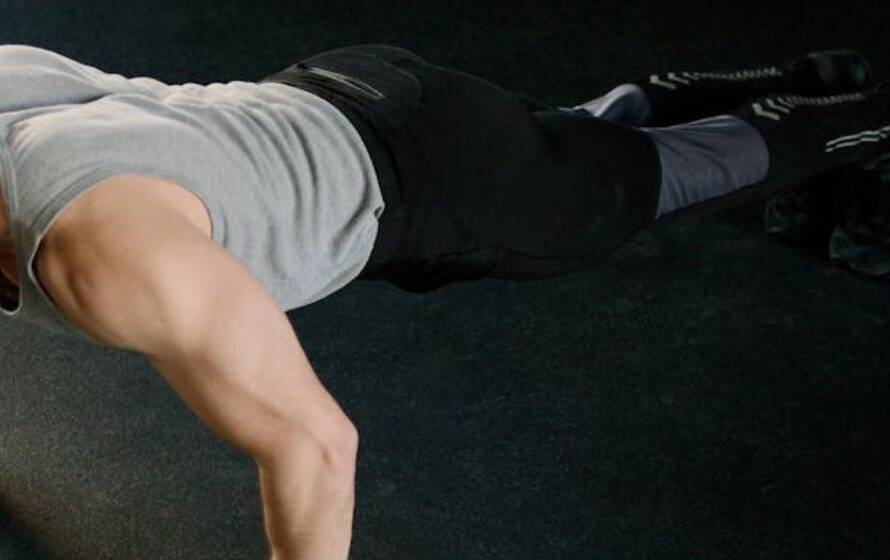
Three numbers tell you whether your RCMP depot fitness plan is on track week by week. First, your push-up count. Start Phase A with however many you can do in one clean set on knees. By Week 8, you should be adding reps consistently. When you switch to full push-ups at Phase B, expect a drop, this is normal. By Week 16, your full push-up count should exceed your Level 1 exit target of 29+ (men) or 21+ (women).
Second, your cardio sustainability. Phase A cardio runs at 6-7 RPE for 20-30 minutes. If you cannot sustain 20 minutes at that effort in Week 1, reduce intensity and build up. By Week 8, 30 minutes at 6-7 RPE should feel controlled, not easy, but manageable. That is the preparation for the Level 2 standard of 30 minutes at 7-8 RPE.
Third, your circuit set count. The Phase A circuit progression is the most precise progress marker in the program. If you hit 3 full sets of all stations at 10-12 reps by Week 7-8, you are on schedule. If you are still at 1-2 sets in Week 6, the rest of your RCMP depot fitness plan needs review.
What Happens After Week 16
Completing Level 1 puts you at the minimum floor for the Depot Week 2 PFT. If your Depot course starts at Week 17 or later, move directly into Level 2, do not rest between levels. Level 2 Phase A adds a back squat with load (60% of bodyweight), replaces some machine exercises with free weights, and raises cardio to 7-8 RPE. The full conditioning program overview covers what Level 2 requires and how long it runs.
If you have more than 32 weeks before Depot, complete Level 1 and Level 2 in sequence. Arriving at Level 2 exit standards gives you substantially more buffer against Depot’s cumulative physical load than arriving at Level 1 minimum. For a comparison of both standards side by side, see the article on how fit you should be before arriving at Depot.
Frequently Asked Questions
Phase A is 4 days per week (weeks 1-8). Phase B drops to 3 days per week (weeks 9-16).
Partially. The circuit days work with bodyweight. The strength days require cables, dumbbells, and an exercise ball.
Push-ups move from knees to toes, squats drop the support, and Bird Dog and Kneeling Reverse Chop are added.
Level 1 exit meets the minimum floor. Completing Level 2 before Depot gives you significantly more margin.
Sources rcmp depot fitness plan
Poirier, L., & Lemelin, S. (2014). RCMP Conditioning Program Level 1, Phase A Day 1, Day 2, Day 3 exercise tables and circuit progression notes. RCMP Health Services.
Poirier, L., & Lemelin, S. (2014). RCMP Conditioning Program Level 1, Phase B Day 1, Day 2 exercise tables and circuit progression notes. RCMP Health Services.
Sources:
Cadet Training Program | Royal Canadian Mounted Police
Depot Division | Royal Canadian Mounted Police
This article reflects current RCMP policy based on official government documentation. Eligibility and suitability decisions are assessed on a case-by-case basis during the application process.
By Alex Morgan, Certified Personal Trainer, https://joinrcmp.ca/author/alex-morgan/