


How is RCMP different from police?
For roles, postings, and specializations, see our RCMP careers guide.
Quick Answer:In Canada, the Royal Canadian Mounted Police (RCMP) holds a unique place in law enforcement, standing out from other policing bodies due to its history, structure, and range of responsibilities. Many people wonder, How is RCMP different from police in other regions or countries? With such distinctive origins and a multi-faceted role, the RCMP serves not only as Canada’s federal police but also performs duties at provincial and municipal levels. In this article, we will explore how the RCMP is different from police in terms of their scope of authority, training, roles, and responsibilities, as well as how these differences impact Canadian society.
1. History and Formation of the RCMP vs. Police Forces
When asking How is RCMP different from police?, it helps to first consider the history of this national force. The RCMP was formed in 1873 as the North-West Mounted Police, initially to maintain law and order in what is now western Canada. As Canada expanded, so did the RCMP, evolving to address diverse needs across the country. Unlike most regional police forces, the RCMP has always been a federal entity with a mandate to cover a vast territory.
Regular police departments, on the other hand, have origins tied to specific municipalities or provinces. They are typically set up to maintain peace within a particular jurisdiction, responding primarily to local issues. Understanding this historical difference helps clarify how the RCMP is different from police operating on a more localized scale.
2. Jurisdictional Differences: National vs. Local
One of the most critical aspects of how the RCMP is different from police is jurisdiction. The RCMP operates nationwide, with authority granted by the federal government, while police forces operate under municipal or provincial jurisdiction. This national reach allows the RCMP to address federal crimes, provide security to key government officials, and even operate internationally in certain cases. In contrast, local police forces are confined to specific areas and focus on enforcing laws within those areas.
For example, if a crime occurs in Toronto, the Toronto Police Service will typically handle the investigation. However, if a federal issue arises, such as organized crime or terrorism, the RCMP would step in. This layered approach to law enforcement highlights how the RCMP is different from police, as they address issues that go beyond the boundaries of local communities.
3. Specialized Roles and Responsibilities of the RCMP
Another key area that answers how is RCMP different from police is the range of specialized roles the RCMP fulfills. The RCMP handles a variety of tasks that local police forces do not. As the federal police force, the RCMP is responsible for national security, counter-terrorism, border security, and intelligence gathering. These duties require specialized training and expertise not typically found in local police departments.
The RCMP also assists in international peacekeeping efforts and operates specialized units like the Integrated National Security Enforcement Teams (INSET) and the Emergency Response Teams (ERT), which tackle threats beyond local capacities. Local police, in comparison, are generally more focused on community issues such as crime prevention, patrolling, and responding to everyday incidents. This division in roles shows how the RCMP is different from police, as the RCMP’s involvement extends to matters of national security and international law enforcement.
4. Training and Recruitment
How is RCMP different from police in terms of training and recruitment? The RCMP has its own training academy, known as “Depot” in Regina, Saskatchewan, where recruits undergo 26 weeks of rigorous training. The program is standardized across Canada, making sure all RCMP officers receive the same foundational training. This centralized approach creates a cohesive force with a consistent skill set, ready to take on diverse challenges at various levels of law enforcement.
In contrast, training for local police departments is generally handled at the provincial level and varies by region. Local police training programs focus on preparing recruits for community-oriented policing within a specific area, whereas the RCMP’s training is designed to equip officers for a broader range of responsibilities, including federal and international duties. This difference in training underlines how the RCMP is different from police, as their preparation reflects the national scope and federal mandate of their role.
5. Uniforms and Symbols
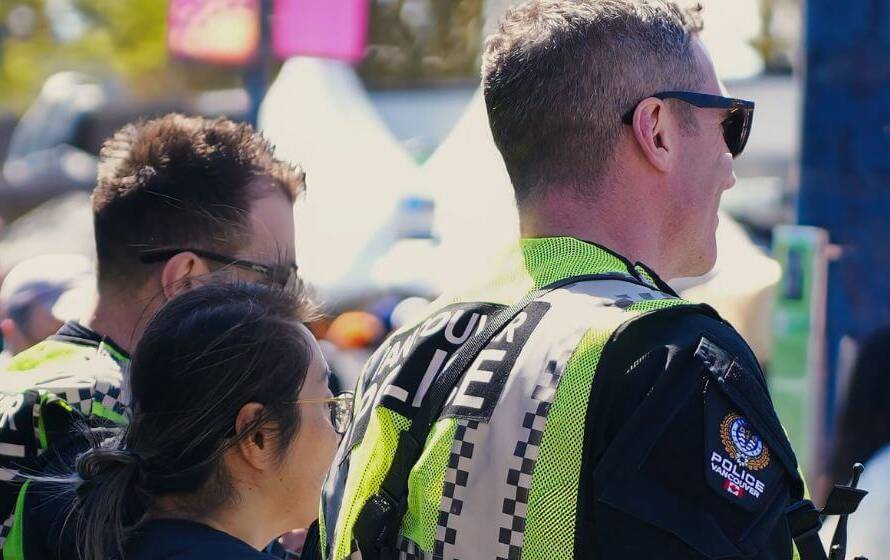
The RCMP is easily recognizable by its distinctive red serge uniforms and the Stetson hats, iconic symbols of Canadian heritage and pride. This uniform is worn during formal ceremonies and represents a historical tradition unique to the RCMP. Local police forces have their own uniforms that are more practical for day-to-day operations and are specific to each region. While uniforms may seem like a minor detail, they contribute to how the RCMP is different from police, emphasizing the RCMP’s federal presence and longstanding role in Canadian history.
6. Community Policing and Public Perception
Community policing is another area where the RCMP’s approach differs from local police. While many police departments focus heavily on community engagement within a defined area, the RCMP operates in both urban and remote regions across Canada. In smaller communities, RCMP officers may serve as the primary or only law enforcement presence, providing a unique form of community support that local police cannot replicate on such a broad scale.
This role enhances the RCMP’s visibility and accessibility in rural and remote areas, further demonstrating how the RCMP is different from police, as their officers often take on a multi-part role within these communities. Public perception also varies, as the RCMP is often seen as a symbol of national pride, while local police are more community-focused.
7. Challenges Faced by the RCMP and Local Police
Despite their differences, both the RCMP and local police forces face challenges, such as resource limitations and the need to build trust within the community. However, the scale and type of issues they encounter differ. The RCMP deals with large-scale challenges, such as organized crime, border security, and terrorism, which require significant resources and coordination with other agencies. Local police forces, on the other hand, are more focused on local crime rates, community relations, and day-to-day safety concerns.
The differences in these challenges further highlight how the RCMP is different from police, as the RCMP’s responsibilities often have national or even international implications.
Conclusion
In short, how is RCMP different from police can be understood by looking at several distinct factors: historical context, jurisdiction, specialized roles, training, symbols, and the challenges they face. The RCMP operates as a federal police force with a unique national and international mandate, setting it apart from local and provincial police departments that focus on community-oriented policing within specific regions. From the iconic red serge uniform to their presence across Canada’s urban and remote areas, the RCMP stands as a singular force in Canadian law enforcement. By understanding how the RCMP is different from police, we gain a clearer picture of Canada’s complex, multi-tiered law enforcement structure and the roles each body plays in maintaining peace and security.
First postings and specializations follow operational need — not personal preference. Most members start in general duty; specialized units usually come after field experience and competition.
Frequently Asked Questions
The RCMP is primarily a federal police force, created by an Act of Parliament and funded by the federal government. However, it also acts as the provincial police force in eight provinces and all three territories through contract policing agreements. Ontario and Quebec have their own provincial forces — the OPP and SQ — and do not use the RCMP for provincial policing.
Yes, in communities where the RCMP holds a municipal policing contract, officers enforce municipal bylaws in addition to provincial and federal laws. This is different from most city police forces, which only enforce laws within their municipality. The RCMP’s authority to operate across all three levels of law — federal, provincial, and municipal — simultaneously is one of its defining structural differences from other Canadian police services.
RCMP officers train for 26 weeks at a single national academy — Depot Division in Regina, Saskatchewan. Every officer in Canada receives the same foundational training regardless of where they will eventually be posted. Municipal police train at provincial police colleges, which vary by region and are generally shorter programs focused on local policing. The RCMP’s centralized model prepares officers for a broader range of duties including federal investigations, remote community policing, and national security work.
In many smaller Canadian communities — particularly outside Ontario and Quebec — the RCMP is the local police force. Through federal-provincial and federal-municipal policing contracts, RCMP officers respond to 911 calls, investigate local crimes, and patrol streets in hundreds of municipalities and rural communities. In these areas there is no separate municipal police department; the RCMP fills that role entirely.
Sources:
RCMP police officer career paths
RCMP careers
This article reflects current RCMP policy based on official government documentation. Eligibility and suitability decisions are assessed on a case-by-case basis during the application process.



2 Comments
Yani Lopez
I am a 40-year-old Canadian citizen with a bachelor’s degree in music from Cuba. I grew up in a military family and have been an office coordinator for almost 3 years in a construction company in Ottawa. Becoming an RCMP officer has been my dream, and I would appreciate information on how I can apply. Thanks!
joinrcmp
Hi Yani — thank you for sharing your background, and it’s great to hear about your interest in joining the Royal Canadian Mounted Police.
A strong first step is to attend an official RCMP career presentation. These sessions are very important because they give you a clear overview of the requirements, application steps, timelines, and expectations of the recruiting process. You’ll also have the opportunity to speak directly with recruiters and connect with other applicants who are already in the process, which can be very helpful.
You can find upcoming recruiting and career presentation events here:
https://rcmp.ca/en/careers-rcmp/recruiting-events?l=Ontario
Best of luck on your journey, and don’t hesitate to keep learning and asking questions as you move forward